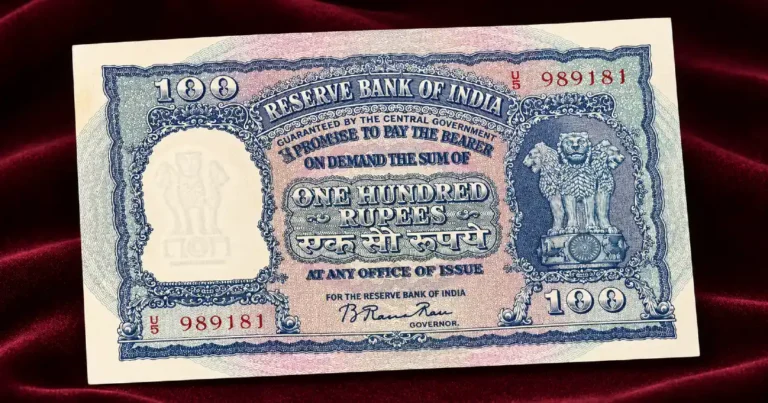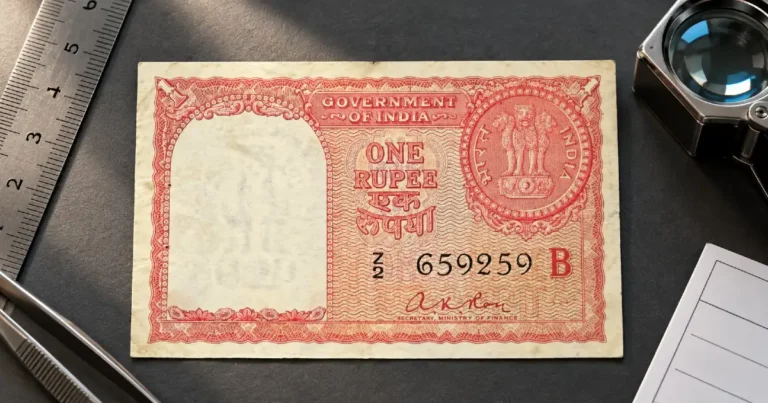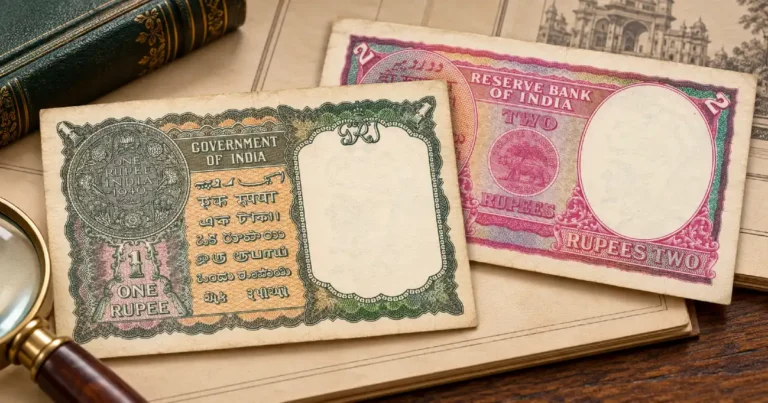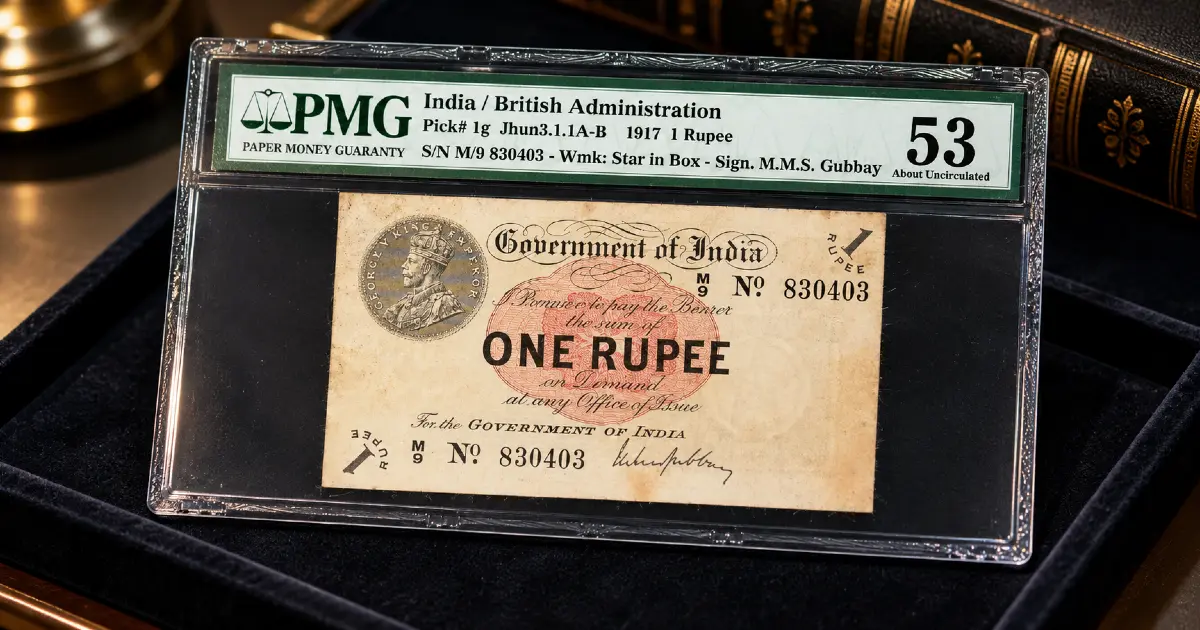
Should you submit Indian banknotes to PMG? It is an important question for collectors considering professional authentication and grading. Third-party certification can provide additional confidence in a banknote’s authenticity and condition, but the costs are not always justified for every note.
Paper Money Guaranty (PMG) is an internationally established banknote grading and authentication service. Collectors submit banknotes for independent examination, attribution, numerical grading where applicable and encapsulation in protective holders.
For collectors of Indian paper money, certification can be particularly useful when dealing with scarce British India issues, important historical overprints, rare Republic India varieties, specimen notes or unusually high-grade examples. These are areas where authentication, accurate attribution and differences in condition can have significant financial implications.
However, professional grading involves submission fees, shipping, insurance and sometimes additional service charges. A banknote does not automatically become more valuable simply because it has been certified, and a disappointing grade may affect the financial outcome of submission.
This guide explains when PMG grading makes sense for Indian banknotes, which types deserve consideration, when certification may be unnecessary, how to interpret population reports and what to consider before submitting.
For an explanation of grading terminology and the numerical 1–70 system, refer to our Banknote Grading Scale. For practical advice on assessing condition yourself, read How to Grade Banknotes.
Table of Contents
What Does PMG Grading Actually Provide?
Professional certification involves several services that should be understood separately. Authentication, condition grading, attribution and encapsulation each provide a different benefit to collectors.
Authentication
Authentication is one of the strongest reasons to consider PMG grading. A genuine historical banknote may be difficult to distinguish from a counterfeit, altered note or unofficial reproduction, especially when the issue is scarce or valuable.
Professional examination provides an independent assessment of authenticity. This can be especially important for British India notes, historical overprints and varieties where a small inscription or numbering difference significantly affects value.
Certification should not be regarded as eliminating every conceivable risk. Collectors should understand the service’s guarantee and remain alert to counterfeit or tampered holders when buying certified notes.
Independent Condition Grading
PMG uses a numerical grading scale to assess the physical condition of eligible banknotes. Independent grading can reduce disagreements arising from inconsistent dealer descriptions such as Uncirculated, Extremely Fine or Very Fine.
A certified grade provides a standardized reference point for comparison. Nevertheless, collectors should remember that a grade is an expert assessment of condition, not a statement of rarity or a guaranteed selling price.
Banknote Attribution
Attribution identifies the banknote’s issue and relevant catalogue details. Depending on the note and available services, a certification label may include denomination, issuing authority, date, catalogue reference, variety or other identifying information.
Accurate attribution can be especially useful for Indian paper money because similar-looking notes may differ by signature, watermark, prefix arrangement, inscription or official overprint.
Specialized varieties and pedigrees may require additional services or documentation, so collectors should review PMG’s current attribution policies before submitting.
Encapsulation and Identification
PMG places certified banknotes in protective, sealed holders bearing identification and grading information. The holder provides a convenient way to identify, organize and display a certified collection while limiting direct handling.
The certification number also allows collectors to consult PMG’s verification database. This is useful when checking a note before purchase or sale.
Why Authentication Can Matter More Than the Grade
Collectors sometimes focus on achieving the highest possible numerical grade. For important Indian banknotes, however, establishing authenticity may be more valuable than obtaining a premium condition assessment.
Consider a scarce nineteenth-century Government of India note. Even if the note has substantial circulation wear, independent confirmation that it is genuine may provide meaningful reassurance to prospective buyers.
The same principle applies to certain Pakistan, Burma or Persian Gulf issues connected with Indian monetary history. Where an inscription, overprint or prefix determines the identity of the note, authenticity of that feature is critical.
A genuine, correctly attributed note in a moderate grade may therefore be a more desirable acquisition than an uncertified example advertised at a higher grade but accompanied by unresolved authenticity concerns.
This is why professional certification should be viewed first as an authentication and documentation service, with condition grading providing another important benefit.
Benefits and Limitations of PMG Certification
Professional certification offers several practical advantages, but collectors should understand its limitations before deciding to submit a note.
Advantages for Collectors
PMG certification can improve confidence in authenticity, provide an independent condition assessment and make it easier to describe a banknote consistently when trading internationally.
Certified notes may also appeal to buyers who prefer third-party grading, particularly for expensive or technically difficult material. Standardized labels help collectors compare examples of similar varieties and grades.
Encapsulation can reduce direct handling, while certification records can assist with cataloguing and identification.
Limitations of Professional Grading
PMG certification does not guarantee that a banknote is rare, that its market value will increase or that a buyer will be willing to pay a particular premium.
A common note remains common after certification. Likewise, a low numerical grade does not become a high grade simply because the banknote is historically important.
Professional grading also has costs, and a banknote may receive a lower grade than the owner expected. In some cases, problems with the note may limit the type of certification or designation it can receive.
Collectors should weigh these considerations before submitting valuable items and avoid assuming that grading will always produce a profitable outcome.
Which Indian Banknotes Are Worth Considering for PMG Grading?
Not all Indian banknotes benefit equally from certification. The strongest candidates are generally those where authenticity, rarity, condition or accurate identification matters enough to justify the cost.
Early British India Uniface Banknotes
Early Government of India uniface notes are among the most compelling candidates for professional authentication. These historical issues may be scarce, expensive and difficult for inexperienced collectors to assess.
Even circulated examples can deserve certification when the underlying type is important. Authentication and correct attribution may be more valuable than the expectation of achieving a high numerical grade.
Explore our British India Banknotes collection for the broader historical context of these issues.
King George V Banknotes
King George V portrait banknotes are an important area of Indian paper money collecting. Depending on denomination, signature and variety, genuine examples can be relatively scarce and valuable.
Professional authentication may provide reassurance when acquiring a desirable example. Certification may also help document condition and facilitate comparison with other surviving notes.
Collectors can explore the principal types in our King George V Banknotes collection.
High-Grade King George VI Notes
Some King George VI issues are relatively accessible in circulated condition but much scarcer in exceptional preservation. High-grade examples may therefore be attractive candidates for professional grading.
Certification can help distinguish truly high-grade notes from examples described optimistically by sellers. This is particularly relevant for desirable denominations, signatures and varieties.
However, common King George VI notes in ordinary circulated grades may not justify submission unless there is another compelling reason.
See our King George VI Banknotes collection for a broader overview.
Persian Gulf and Hajj Banknotes
Special Indian rupee issues associated with the Persian Gulf and Hajj pilgrims can be particularly interesting because their identification depends on specific historical circumstances and distinguishing features.
Professional certification may provide additional confidence when a note’s prefix, issue type or authenticity is essential to its collector value.
For the Persian Gulf issues, see our Persian Gulf Rupees collection.
British Burma and Related Currency Issues
British Burma banknotes, including King George V and King George VI issues, provide additional opportunities for specialist collecting. Monetary and administrative changes during the twentieth century also produced distinctive transitional currency.
Professional grading may be worthwhile for rare examples, valuable overprints or difficult-to-authenticate varieties, particularly when the underlying historical issue is scarce.
Collectors interested in this area can consult our British Burma Banknotes collection.
Pakistan King George VI Issues
Following Partition, Pakistan used currency based on existing King George VI designs, including notes with Pakistan inscriptions or overprints depending on the issue.
Authentication is especially important where the distinguishing feature substantially affects value. Collectors should not treat all Pakistan inscriptions as technically identical overprints, since their production arrangements differed.
Professional attribution can provide useful reassurance for valuable examples. See our Pakistan Overprint Banknotes collection.
Hyderabad and Other Regional Issues
Banknotes issued by Hyderabad and other historical authorities form specialized collecting categories. Some are scarce or challenging to authenticate because of their age, complex issue history and numerous varieties.
Certification may be worthwhile for important examples, provided the grading service accepts the particular note type and supports appropriate attribution.
Rare Republic India Varieties and Exceptional Grades
Republic India notes should not be overlooked. Certain denominations, signatures, watermarks, printing varieties or unusually well-preserved examples can be desirable to specialist collectors.
Certification is most useful where the note is genuinely scarce, where the grade has a meaningful effect on market value or where attribution requires independent verification.
For common Republic India issues in ordinary condition, the cost may outweigh the benefits.
Specimen Banknotes
Specimen notes deserve particular consideration because they may carry distinctive overprints, perforations, serial-number arrangements or other official characteristics.
Authentication is critical when a specimen marking makes the difference between an ordinary note and a highly desirable collectible. False specimen overprints and unofficial alterations can present risks.
Professional certification may assist with authentication and identification, although acceptance and attribution depend on the grading service’s policies and available references.
Important Error Banknotes
Genuine production errors can also benefit from professional authentication. This may be especially useful for major printing omissions, unusual numbering errors and significant folding or cutting defects.
Artificially created errors can imitate valuable production mistakes, so the authenticity of the error itself is important.
Our Indian Banknote Errors guide explains the distinction between genuine production mistakes, design varieties and altered notes.
When PMG Grading May Not Be Worthwhile
Although certification offers advantages, some categories of banknotes are unlikely to justify the associated expense.
Common Modern Notes in Average Condition
Ordinary modern Republic India notes in circulated condition generally do not require professional grading when their market value is low and authenticity is not seriously disputed.
Submitting a large number of inexpensive common notes may create expenses that cannot realistically be recovered through resale.
Low-Value Notes Without Special Characteristics
A banknote does not become a worthwhile grading candidate simply because it is old. If the type is common, the condition unremarkable and the likely market value modest, certification may offer limited financial benefit.
Collectors who value an item for personal or sentimental reasons may still choose to have it certified, but the decision should be understood as a collecting expense rather than an investment.
Notes with Limited Resale Demand
Some banknotes are uncommon but attract relatively few buyers. In such cases, certification may not materially improve resale opportunities.
Before submitting, consider whether collectors actively pursue the particular denomination, variety or historical issue.
Submitting Solely in Hope of a Higher Value
Professional grading does not guarantee a higher selling price. The assigned grade may be lower than anticipated, and the market may already have sufficient certified examples.
A realistic assessment should compare the expected benefits with the total submission cost, rather than assume that certification automatically creates a premium.
Understanding PMG Labels and Designations
A PMG holder generally identifies the banknote, its assigned grade and a unique certification number. Depending on the note and applicable services, the label may also contain catalogue references, varieties or relevant designations.
Collectors should read the complete label rather than focus only on the numerical grade. Two notes with the same grade may differ in issue, attribution, eye appeal or other characteristics.
Numerical Grades
PMG uses a numerical grading system ranging from 1 to 70 for eligible notes. Higher numbers generally represent better-preserved examples, but numerical grade alone does not measure rarity or historical importance.
Our Banknote Grading Scale explains the individual grades and their traditional equivalents in detail.
EPQ and Star Designations
PMG may award the Exceptional Paper Quality (EPQ) designation to qualifying notes that meet its originality standards. Its Star designation identifies exceptional eye appeal relative to the assigned grade.
These designations can be useful when comparing certified examples, but they should not be treated as automatic guarantees of superior market value.
Other label comments and qualifications may describe relevant condition issues. Collectors should consult the grading service’s current terminology rather than rely solely on informal market descriptions.
How to Use the PMG Population Report
The PMG Population Report is an important research resource for collectors of certified banknotes. It records the numbers of notes represented in PMG’s grading database by relevant issue and grade categories.
Population data can help collectors understand the relative availability of certified examples and compare grades within an issue.
Comparing Certified Populations
Suppose an issue has numerous certified examples in circulated grades but very few in high uncirculated grades. This may suggest that exceptional preservation is difficult to find among the notes submitted to PMG.
Such information can be useful when considering whether to submit a high-grade King George VI note or another desirable historical variety.
However, a small certified population does not necessarily establish a small total surviving population.
Population Reports Are Not Complete Survival Records
Many banknotes have never been submitted to professional grading. Some collectors prefer raw notes, while institutions and private collections may hold significant quantities outside the certification market.
In addition, regrading, resubmission and changes in attribution can complicate the interpretation of population figures.
Therefore, a population of one should not be interpreted as proof that only one example exists.
Understanding the Highest-Graded Examples
Collectors sometimes describe a certified note as finest known or highest graded. Such claims should be assessed carefully because population data can change when additional examples are submitted.
Several notes may also share the same highest assigned grade. A distinction such as sole highest graded should therefore be verified against current population information and the precise variety being compared.
The PMG Population Report provides current data for supported categories and is best used alongside catalogue research and actual market observations.
How Much Does It Cost to Submit Indian Banknotes to PMG?
The total cost of professional grading is often greater than the advertised grading fee. Collectors should consider all expenses before deciding whether submission makes financial sense.
Grading Fees and Service Tiers
PMG offers different submission tiers depending on factors such as declared value, note type and selected service. Additional services may be available for certain varieties, pedigrees or other special requirements.
Fees and turnaround estimates can change, so it is preferable to consult the official PMG Services and Fees page rather than rely on a fixed amount quoted in an older collecting article.
Membership and Dealer Submission
Collectors may be able to submit directly through an eligible PMG membership arrangement or use an authorized dealer, subject to current service rules and regional availability.
A dealer may assist with submission documentation and logistics but can charge additional service fees. Collectors should clarify the full cost and responsibility for the banknotes before proceeding.
Shipping, Insurance and Customs
International submissions may involve insured shipping, customs documentation, handling charges and return-shipping costs. These can be significant for collectors outside the country where the grading facility operates.
Collectors should also verify any legal restrictions applicable to shipping or exporting particular categories of Indian currency. Requirements may depend on the note’s age, legal status, destination and applicable law.
Do not assume that a banknote can be exported simply because it is intended for grading. Seek appropriate guidance where the legal position is uncertain.
Calculating the Total Cost
Before submitting, estimate the grading fee, applicable membership or dealer charges, shipping, insurance, customs-related costs and any optional services.
Then compare this total with the note’s realistic market value, the likely benefit of authentication and the expected demand for certified examples.
The calculation should be conservative. A note may receive a lower grade than anticipated, and a higher selling price is never assured.
Does PMG Grading Increase the Value of Indian Banknotes?
PMG grading can influence market confidence and resale appeal, but it does not automatically increase value. The outcome depends on the banknote and the circumstances of the sale.
When Certification May Help Resale
Certification may be helpful for rare or expensive notes where buyers are concerned about authenticity, attribution or condition.
An authenticated historical overprint or high-grade portrait note may appeal to a wider international audience when accompanied by recognized certification.
However, the extent of any premium depends on comparable sales and actual demand.
When Certification May Have Limited Financial Benefit
For common modern notes or inexpensive circulated examples, grading fees can represent a large share of the total value.
Even when certification provides useful documentation, there may be no realistic expectation that the eventual selling price will cover all submission costs.
Avoid Assuming a Grade Guarantees a Price
Two notes with the same numerical grade may command different prices because of their varieties, rarity, signatures, visual appeal or market timing.
For a broader discussion of how condition interacts with rarity and market demand, read Understanding Banknote Values.
How to Verify a PMG-Certified Banknote
Collectors purchasing certified banknotes should examine both the note and its holder. Certification is valuable, but counterfeit labels and tampered holders are risks that should not be ignored.
Check the Certification Number
PMG provides an online certification verification service. Collectors can use the certification number and grade to review the recorded information and, where available, images of the certified note.
Visit PMG Certification Verification when checking a holder before purchase.
Compare the Note with the Record
Confirm that the denomination, issue, signature, serial number, grade and other identifying features correspond with the banknote being offered.
Where official images are available, compare them carefully with the physical note or seller’s photographs.
A valid certification number alone does not prove that every holder displaying that number is genuine.
Examine the Holder and Seller
Look for obvious damage, evidence of opening or resealing and inconsistencies between the label and the banknote.
Purchase valuable certified notes from reputable sources and seek further verification when the holder or certification information raises concerns.
PMG Versus PCGS Banknote and Other Grading Alternatives
PMG is not the only organization providing banknote grading and authentication. Collectors may consider other services depending on geographic location, market preferences, expertise and acceptance among potential buyers.
PCGS Banknote
PCGS Banknote provides third-party authentication and grading services using a numerical scale. Its designations and service policies are not necessarily identical to those of PMG.
Collectors should evaluate the service’s current standards, submission arrangements and market recognition rather than assuming that grades or designations from different companies are fully interchangeable.
See the official PCGS Banknote website for current information.
Local Grading and Authentication Services
Local services, including organizations such as PMCS in India, may be considered by collectors seeking regional authentication or grading options.
Before using any service, assess its expertise, authentication standards, holder security, independence and recognition among buyers in your intended market.
A lower fee does not automatically mean better value if the certification is less widely accepted or does not adequately address authenticity concerns.
A Practical Checklist Before Submitting Indian Banknotes to PMG
Before submitting a note, consider the following questions. They provide a practical framework for deciding whether professional grading is worthwhile.
- Is the banknote genuinely scarce, valuable or historically significant?
- Would independent authentication materially improve confidence in the note?
- Is the denomination, signature, overprint, specimen marking or other variety difficult to identify?
- Is the note in sufficiently high condition that an independent grade may matter?
- Are comparable certified examples actively sought by collectors?
- Have you checked available PMG population information without treating it as a complete survival record?
- Do you understand the likely grading tier and all associated costs?
- Are submission, insurance and shipping arrangements practical and legally permissible?
- Would certification still be worthwhile if the assigned grade were lower than expected?
- Are you submitting primarily for authentication, collection organization or a realistic resale benefit?
If the answers indicate strong benefits from authentication, attribution or condition assessment, submission may be justified. If the banknote is common, inexpensive and easily authenticated, grading may offer limited practical value.
There is no universal monetary threshold at which every Indian banknote should be graded. The decision depends on the individual note, the collector’s objectives and the total cost involved.
Conclusion: Should You Submit Indian Banknotes to PMG?
Deciding whether to submit Indian banknotes to PMG requires a realistic assessment of authenticity, rarity, condition and cost. Professional certification can provide valuable reassurance, particularly for scarce British India notes, important historical varieties, exceptional grades, specimens and significant production errors.
Authentication is often the most important benefit. A genuine, correctly identified historical banknote can be a desirable collectible even when it has substantial circulation wear.
However, certification is not automatically worthwhile for common or inexpensive notes. Submission costs, market demand and the possibility of receiving a lower-than-expected grade should all be considered.
Use the Banknote Grading Scale to understand professional grades and designations, and read How to Grade Banknotes for practical advice on examining condition before submission.
For collectors seeking certified historical paper money, our PMG Graded Banknotes collection provides a further starting point.
Frequently Asked Questions About PMG Grading Indian Banknotes
Should you submit Indian banknotes to PMG?
PMG grading may be worthwhile for rare, valuable or difficult-to-authenticate Indian notes, especially where independent condition assessment and attribution provide meaningful benefits. Common inexpensive notes often do not justify the total submission cost.
Which Indian banknotes are best for PMG grading?
Strong candidates can include rare British India uniface notes, King George V issues, high-grade King George VI notes, Persian Gulf and Hajj issues, Burma and Pakistan transitional currency, Hyderabad notes, important Republic India varieties, specimens and significant errors.
Is PMG grading worth it for common Republic India notes?
Often not, particularly for inexpensive circulated notes. Certification may be more worthwhile when a Republic India note is unusually scarce, exceptionally well preserved or difficult to authenticate.
Does PMG certification guarantee authenticity?
PMG provides professional authentication backed by its guarantee, subject to the applicable terms and exclusions. Collectors purchasing certified notes should still verify the holder and certification information.
Does PMG grading automatically increase banknote value?
No. Certification may improve confidence and resale appeal, but actual value depends on the banknote’s rarity, grade, authenticity, buyer demand and market conditions. Grading costs should be considered.
How much does PMG grading cost?
Costs depend on the grading tier and applicable services. Membership, dealer charges, shipping, insurance and other expenses may apply. Check PMG’s current official fee schedule before submitting.
Can a low-grade rare Indian note benefit from PMG grading?
Yes. For scarce historical notes, independent authentication and accurate identification can be valuable even when the condition is modest. The benefits depend on the note’s importance and the total cost of certification.
What does the PMG Population Report tell collectors?
It reports the number of notes represented in PMG’s certification database by issue and grade. It is useful for comparing certified populations but does not establish the total number of surviving banknotes.
Is a PMG population of one proof that a banknote is unique?
No. It means one example is represented in the relevant certification category at the time of checking. Other examples may survive uncertified, and population figures can change.
How can I verify a PMG holder?
Use PMG’s official certification verification service and compare the recorded note details and available images with the actual holder. A matching certification number alone is not sufficient if other characteristics raise concerns.