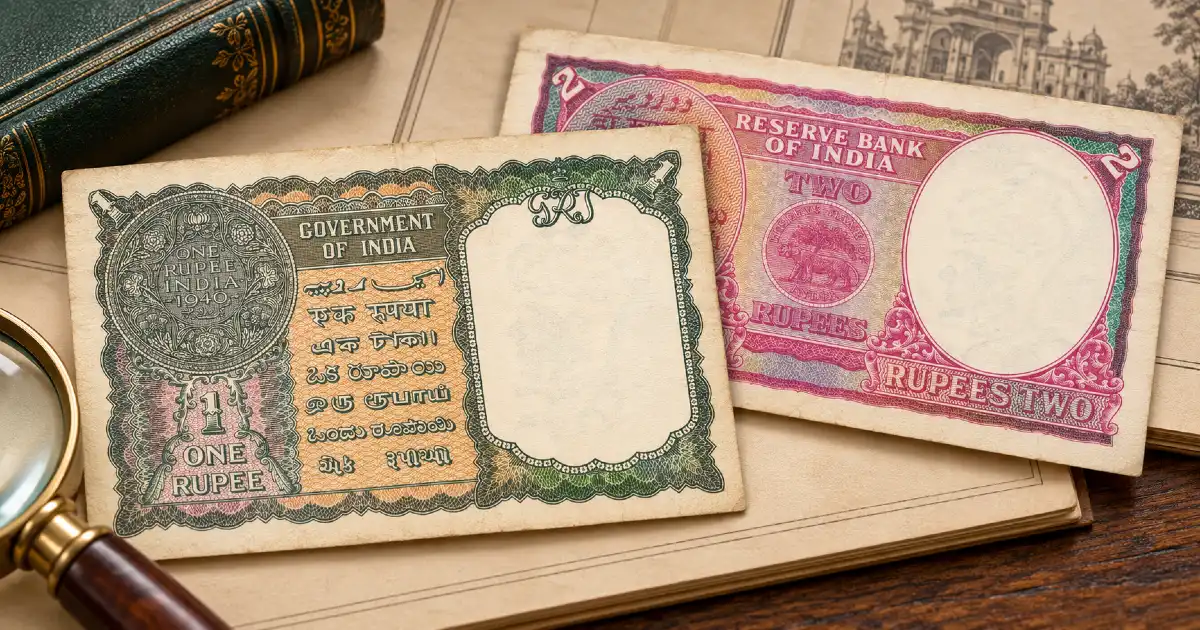
Learning how to start collecting Indian banknotes can open the door to a fascinating hobby combining history, art, economic development and the pleasure of discovery. From British India portrait notes to Republic India currency, India’s paper money offers an extraordinary range of designs, denominations and historical varieties. Whether you begin with a few inexpensive notes or plan to develop a specialist collection, the important first step is understanding what interests you and how to collect confidently.
Banknote collecting, also known as notaphily, is the collection and study of paper money. Indian banknotes are especially rewarding because their history extends across different issuing authorities, political periods and geographical regions. They also offer considerable variety in signatures, watermarks, serial numbers, printing methods and decorative designs.
Beginners sometimes assume that collecting requires expensive historical banknotes or rare uncirculated examples. In reality, many satisfying collections begin with accessible Republic India issues, ordinary circulated notes or a small selection of different denominations. Knowledge and careful selection matter more than purchasing a large quantity of currency.
This guide combines practical collecting advice with an introduction to the most popular Indian banknote collecting themes. It covers choosing a focus, establishing a budget, identifying notes, assessing authenticity and condition, purchasing responsibly, preserving your collection and developing your interests over time.
If you are interested in the historical, artistic and financial attractions of the hobby, our Why Collect Indian Banknotes? article explores those motivations in greater depth. Here, we concentrate on the practical question: how do you begin building a worthwhile collection of Indian paper money?
Table of Contents
1. Understand the Basics of Indian Banknote Collecting
Before purchasing your first notes, become familiar with the broad structure of Indian paper money. India has a long monetary history involving private banks, the Government of India, the Reserve Bank of India and several regional or colonial issuing authorities. Understanding these distinctions makes it easier to recognize what a particular banknote represents.
British India Paper Money
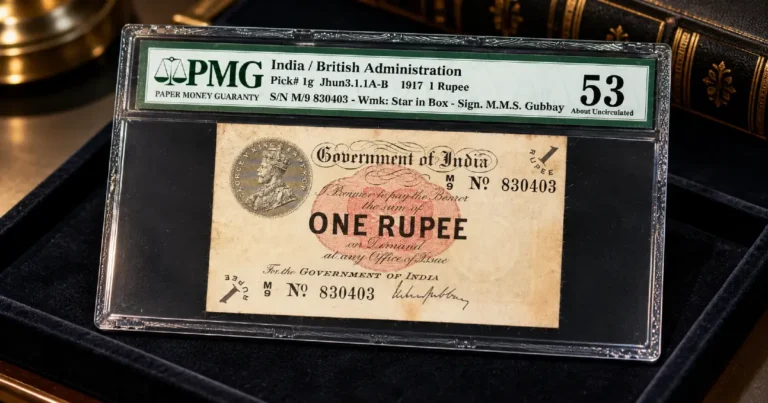
Early British India notes include issues associated with private banks and the Presidency Banks, followed by Government of India currency after the Paper Currency Act of 1861. Queen Victoria portrait notes, green and red underprint uniface notes, and later King George V issues belong to this historical development.
The Reserve Bank of India commenced operations in 1935 and introduced its own King George VI portrait notes beginning in 1938. These issues are particularly interesting because collectors can identify different signatures and wartime design changes.
Some British India notes are difficult and expensive to obtain, while more accessible circulated examples may offer a practical introduction to the period. Explore the British India Banknotes collection to understand its principal types and historical divisions.
Republic India Paper Money
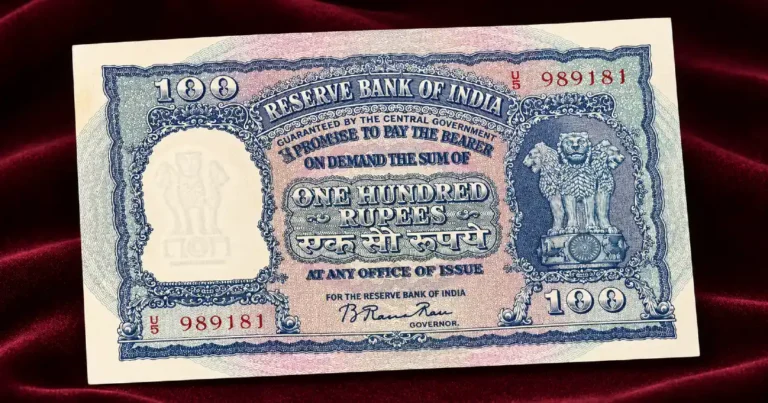
Following independence in 1947, India gradually replaced royal portrait currency with national designs. Early Republic India notes featured the Lion Capital of Ashoka, while later series incorporated agricultural, industrial, wildlife and architectural illustrations. The Mahatma Gandhi Series, introduced in 1996, brought another major change in banknote design.
Republic India offers a useful starting point because many denominations, signatures and designs are relatively accessible. Collectors can develop meaningful sets without immediately purchasing very rare historical issues.
Our Republic India Banknotes collection introduces the principal designs and varieties available to collectors.
Related Regional Currency
Indian monetary history also connects with Hyderabad, British Burma, French India, Portuguese India, Pakistan and the Persian Gulf. These territories experienced different administrative arrangements, and their banknotes sometimes retained Indian designs or relied on Indian issuing institutions.
Beginners do not need to study all these areas immediately. However, knowing that they exist helps explain why Indian paper money collecting can become a remarkably diverse field of historical research.
2. Choose Your Indian Banknote Collecting Theme
Choosing a theme is one of the most effective ways to develop an organized collection. Without a clear direction, it is easy to purchase unrelated notes that eventually become difficult to catalogue or display. A collecting theme provides a framework for deciding which banknotes to acquire and which to leave for another occasion.
The best theme is not necessarily the rarest or most expensive. It should reflect your interests, available budget and willingness to research the subject. The following are among the most popular Indian banknote collecting themes, incorporating ideas from our earlier collecting-themes guide.
Collecting by Historical Period
An era-based collection follows the evolution of Indian currency through different political periods. You might begin with British India portrait notes, concentrate on the first decades following independence or assemble representative designs from the Mahatma Gandhi Series.
This approach appeals to collectors interested in history. A chronological collection can show how portraits, national symbols, language panels and security features changed over time.
Collecting by Denomination
Some collectors choose a single denomination and study its changing designs. The 1 Rupee note is an excellent example because it connects the King George V and King George VI periods with numerous Republic India issues. A collection may include changes in signatures, printing arrangements, coin dates and watermarks.
Other possibilities include 2, 5, 10, 100 or 1,000 Rupees notes. The availability and expense of the collection will differ considerably according to the denomination and historical periods selected.
Collecting by Signature or Issuing Official
Signatures are important identification features on Indian banknotes. A collector may pursue notes signed by different RBI Governors, or study a single denomination across several Governors’ tenures.
This approach can provide a structured objective because signatures often correspond to identifiable periods of banknote issuance. However, the signature alone does not establish the exact issue date, and collectors should consult catalogue information when classifying individual notes.
Fancy Serial Number Banknotes
Fancy serial number collecting focuses on unusual numerical patterns. Popular examples include solid numbers, ascending or descending ladders, radars, repeaters and very low serial numbers. Some collectors also pursue culturally meaningful combinations such as 786.
This theme is attractive because the number itself can make an otherwise familiar note interesting. However, not every number described as unusual is genuinely scarce, and collectors should distinguish recognized patterns from ordinary sequences.
Browse our Fancy Serial Number Banknotes collection for an introduction to the principal collecting categories and available examples.
Indian Banknote Errors
Printing and production errors form another specialist collecting field. Examples may include mismatched serial numbers, significant printing misalignments, missing design elements or errors involving the application of different printing stages.
Error collecting requires caution because damaged, altered or counterfeit notes may be mistaken for genuine production mistakes. A note with an unusual appearance should be examined carefully before being purchased at a premium.
Regional and Historical Issues
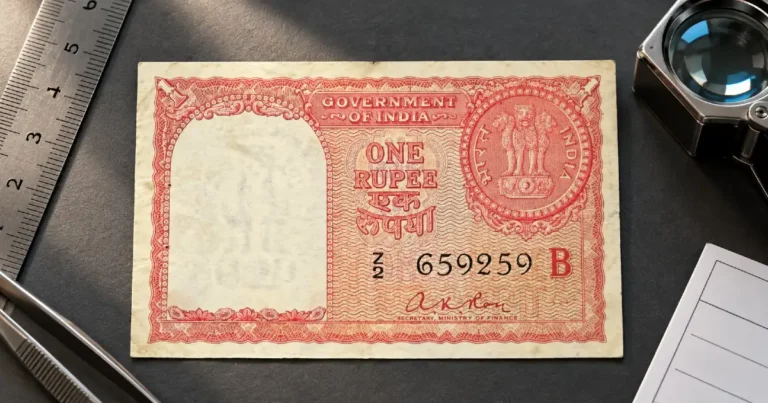
Collectors interested in South Asian history may prefer British Burma currency, Pakistan’s 1948 provisional banknotes, Hyderabad issues or the special Indian rupee notes introduced for the Persian Gulf in 1959.
These collecting areas illustrate political and monetary transitions. For example, Burma’s changing administration produced several distinctive banknote groups, while the Persian Gulf rupees can be identified through their special serial prefixes and restricted circulation arrangements.
Further examples can be found in our British Burma Banknotes, Pakistan Overprint Banknotes and Persian Gulf Rupees collections.
Art, Wildlife and Cultural Themes
Some collections are organized around visual subjects rather than historical periods. Wildlife, architecture, agricultural scenes, national monuments and language panels all provide possibilities for thematic collecting.
A collector might assemble notes featuring tigers, elephants, peacocks or rhinoceroses, while another may concentrate on banknotes depicting historic buildings. Such themes can connect issues from different periods and issuing authorities.
For beginners, it is usually best to select one principal theme and expand gradually. A focused collection encourages deeper knowledge and helps ensure that each new acquisition contributes to an identifiable objective.
3. Set a Realistic Budget and Collecting Plan
A collecting budget helps you enjoy the hobby without feeling pressured to pursue every interesting note. Indian banknotes range from inexpensive modern examples to rare historical issues that attract substantial prices. The most suitable starting budget depends on the theme you have chosen.
Begin by identifying the approximate cost of several notes that would fit your collection. Compare offers for genuinely similar examples, taking account of condition, signature, variety and authenticity. This provides a more useful picture of the market than relying on a single dealer’s asking price.
Prioritize Representative Notes
A beginner collecting Republic India notes may wish to acquire representative examples of different designs before studying every signature. Someone interested in British India could begin with a more obtainable King George VI note rather than immediately seeking rare nineteenth-century issues.
This approach builds understanding while spreading purchases over time. It also leaves room to adjust your interests as you gain experience.
Balance Rarity with Availability
A collection requiring exceptionally rare notes can become frustrating if progress depends on issues that seldom appear on the market. By contrast, a theme with some accessible examples and a few challenging pieces may offer a more satisfying long-term project.
It can be helpful to divide a want list into notes you hope to acquire soon, notes requiring a larger budget and long-term objectives. This keeps collecting purposeful without turning every purchase into an urgent decision.
Remember that collecting does not require constant spending. Researching your existing notes, identifying varieties and improving your catalogue can be just as productive as making new acquisitions.
4. Learn How to Identify Indian Banknotes
Accurate identification is one of the most useful skills for anyone learning how to collect Indian banknotes. Two notes bearing the same denomination and general design may differ in signature, watermark, serial prefix or other details that affect their catalogue classification and collector demand.
Examine the Issuing Authority and Design
Start by identifying who issued the note. Government of India and Reserve Bank of India issues have different institutional histories, and related currency from Burma, Pakistan or other territories may carry distinctive inscriptions.
Next, examine the principal design. Portraits, national emblems, reverse illustrations and denomination arrangements provide the first clues to the period and type. The presence of a familiar portrait does not necessarily mean that two notes belong to the same issue.
Check Signatures, Prefixes and Watermarks
The signature is often an important variety indicator. Serial numbers and prefixes may also distinguish specific printings or issuing arrangements, especially on British India notes. Watermarks should be examined carefully using appropriate lighting and compared with trusted references.
Other useful details include security threads, inset letters, language panels, date inscriptions and official overprints. Each characteristic should be considered in the context of the complete banknote.
Use Reliable Numismatic References
Specialized catalogues provide essential information about recognized banknote types and varieties. Important references include Indian paper money catalogues by established researchers, the Standard Catalog of World Paper Money and the India and related country chapters of The Banknote Book.
Different catalogues may use different numbering systems. Record the reference system being used rather than assuming that every catalogue assigns the same number to an issue.
For terminology such as uniface, watermark, inset letter and issuing circle, consult the Indian Paper Money Glossary available in our website’s educational resources.
5. Understand Banknote Condition, Grading and Authenticity
Condition has a major influence on the appearance and market value of collectible paper money. A note that has been extensively circulated may remain historically interesting, but its preservation differs from an example that retains crisp paper and shows little or no evidence of handling.
Common Banknote Grades
Collectors frequently describe banknote condition using traditional grades such as Uncirculated (UNC), Extremely Fine (EF or XF), Very Fine (VF), Fine (F) and Very Good (VG). These terms provide a general indication of circulation wear, although precise grading standards require more detailed examination.
An uncirculated note should have no circulation folds and generally retains its original paper characteristics. Extremely Fine notes may show limited handling or folds, while Very Fine notes exhibit more noticeable circulation wear. Lower grades may include heavier folds, softened paper, edge wear and other signs of use.
Authenticity Comes Before Grade
A rare banknote is only desirable when its authenticity can be established. Counterfeit notes, altered serial numbers and unofficially applied overprints are important concerns, particularly among valuable historical issues.
Authentication involves more than looking for a watermark. Paper characteristics, printing techniques, signatures, inks and known varieties may all be relevant. A genuine banknote can also be altered to resemble a scarcer type, so the authenticity of individual features matters as much as that of the underlying note.
When Professional Grading Is Useful
Services such as Paper Money Guaranty (PMG) provide independent authentication and standardized condition assessment. Certified notes may offer additional reassurance when purchasing expensive material, but grading is not necessary for every banknote in a beginner’s collection.
Consider certification when dealing with scarce historical issues, important overprints, high denominations or varieties whose condition and authenticity may be difficult to assess. The grading fee should be reasonable in relation to the banknote’s significance and expected market value.
Explore our PMG Graded Banknotes collection to see examples of independently certified Indian and related paper money.
6. Know Where and How to Buy Indian Banknotes
Once you understand your collecting focus, budget and basic identification principles, the next step is finding suitable banknotes. Collectors acquire notes through specialist dealers, numismatic auctions, collecting societies, exhibitions and established online marketplaces.
Buying from Specialist Dealers
A reputable dealer should provide accurate descriptions, clear photographs and reasonable information about condition and authenticity. Specialist knowledge can be particularly useful for beginners unfamiliar with the historical varieties of Indian currency.
Before purchasing, examine the seller’s return terms and determine whether the note is being offered as an original collectible, a reproduction or another type of item. For expensive notes, request additional photographs or certification details if necessary.
IndiaBanknotes offers historical Indian and related paper money through its British India and Republic India collections, together with more specialized collecting categories.
Buying at Numismatic Auctions
Auctions can provide opportunities to acquire uncommon notes and observe the prices collectors actually pay. However, buyers should study descriptions, condition reports, estimate ranges and total costs before bidding.
Auction commissions and related charges may substantially increase the final amount paid. Competing bids can also exceed initial expectations, so establish a maximum price before participating.
Online Marketplaces and Private Sales
Online marketplaces offer convenience and variety, but listings differ greatly in accuracy. Collectors should be especially cautious of unusual notes advertised at sensational prices without reliable supporting evidence.
Examine whether photographs show the actual note being sold rather than a generic example. Check both sides, inspect the serial number and consider the seller’s reputation and return conditions.
When purchasing across borders, consider shipping arrangements, customs requirements and any laws governing the possession, sale or export of particular categories of currency. Requirements vary by jurisdiction and by the legal status of the notes concerned.
7. Choose the Right Accessories and Protect Your Collection
Paper money is vulnerable to moisture, light, dirt, folding and chemical damage. Proper preservation should begin with the first banknote you acquire, not only after a collection becomes valuable.
Archival-Quality Sleeves
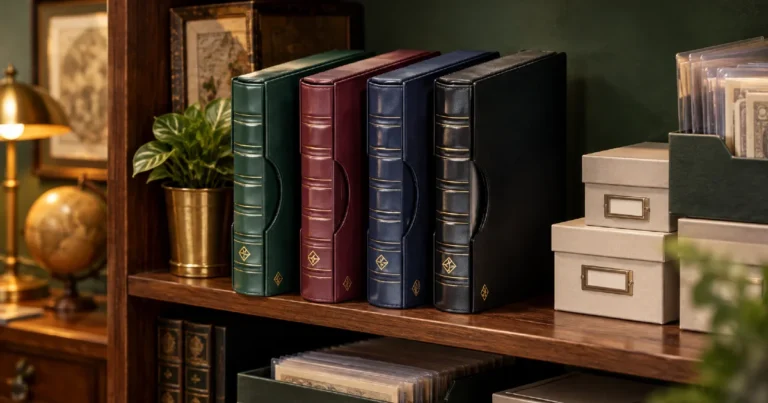
Use holders made from suitable archival materials, such as inert polyester or polypropylene manufactured for long-term document storage. Avoid ordinary soft plastic sleeves containing PVC or other materials that may damage paper or printing inks over time.
Select a holder large enough to accommodate the complete note without bending its edges. Valuable notes should not be repeatedly removed for inspection, as unnecessary handling increases the risk of accidental damage.
Albums and Storage Boxes
An album provides a convenient way to organize notes by period, denomination or collecting theme. Storage boxes may be more appropriate for individually encapsulated or unusually large historical banknotes.
Keep the collection in a stable environment away from direct sunlight, excessive humidity and temperature fluctuations. Avoid attics, damp cupboards and other locations where environmental conditions are difficult to control.
Magnification and Lighting
A suitable magnifying glass or loupe can help examine printing details, signatures and serial numbers. A light source can assist with viewing watermarks, while ultraviolet illumination may be useful for studying certain security features and detecting some forms of alteration.
However, no single accessory can establish authenticity in every case. Security features differ among historical banknote series, and some older notes lack features familiar from modern currency.
Handle Banknotes Carefully
Handle notes with clean, dry hands and support them on a clean, flat surface. Do not attempt to remove stains, straighten folds through ironing, apply adhesive tape or repair tears without professional conservation advice.
Improper cleaning and restoration can permanently damage paper and reduce collector confidence. Preserving a note’s original condition is generally preferable to making it appear artificially newer.
8. Organize, Catalogue and Document Your Banknotes
A well-maintained catalogue transforms a group of banknotes into an organized collection. Recording information from the beginning makes it easier to track acquisitions, identify duplicates, evaluate expenditure and plan future purchases.
Information Worth Recording
At a minimum, record the issuing authority, denomination, design type, signature, serial number, prefix and condition. Where relevant, include the watermark, date, issuing circle, overprint and catalogue reference.
Purchase information is equally useful. Keep the acquisition date, seller, purchase price and associated costs. For certified notes, record the grading service, assigned grade and certification number.
Maintain Photographs and Provenance
Clear images of both sides help document your collection and can be useful for insurance, identification or future sale. Photograph notes under even lighting, without filters that change their appearance.
Retain invoices, auction descriptions and other provenance information where available. Historical ownership records may be especially important for unusual or valuable notes.
Use a Spreadsheet or Digital Catalogue
A simple spreadsheet is sufficient for many collectors. Columns can be arranged by denomination, catalogue number, signature, serial number, grade, acquisition cost and storage location.
As your knowledge develops, you can add information about known varieties, scarcity, recent comparable transactions and outstanding wants. This creates a useful personal research resource rather than merely a list of purchases.
For a themed collection, a checklist can be especially satisfying. It shows which notes have been acquired and where the remaining gaps lie, making future research more focused.
9. Learn How to Evaluate Value and Avoid Common Mistakes
Collectible banknote prices are influenced by rarity, authenticity, condition and demand. Beginners should understand these factors before assuming that an old note or unusual serial number must be valuable.
Distinguish Age from Rarity
Age alone does not determine value. Some older banknotes survive in substantial quantities, while particular modern varieties may be difficult to find. A note’s original issue quantity, survival rate and collector demand all affect its market position.
Likewise, a common design may become substantially more desirable when found in exceptional original condition or with an important signature or watermark variety.
Do Not Confuse Asking Prices with Market Value
An advertised price is what a seller hopes to receive, not proof that an item is worth that amount. Compare completed sales where possible, taking account of grade, originality and the exact catalogue variety.
This is especially important for fancy serial numbers and ordinary modern banknotes. Sensational prices displayed online are not reliable evidence of actual transactions.
Beware of Misidentified Errors and Varieties
Damage can sometimes resemble a production error, while altered inscriptions or serial numbers can imitate scarce varieties. Before paying a premium, establish whether the characteristic is recognized, genuine and consistent with how the banknote was manufactured.
For expensive purchases, consider obtaining an independent opinion or professional certification rather than relying solely on the seller’s description.
Our Why Collect Indian Banknotes? article explores the personal, historical and financial rewards of collecting in greater depth.
10. Develop Your Collection and Learn from Other Collectors
A collection develops gradually. As you acquire notes and study their features, you may discover interests that differ from your original plan. This is a normal and enjoyable part of the hobby.
Begin with a Small, Achievable Goal
Choose a project that can make visible progress. For example, assemble several representative Republic India denominations, acquire a small selection of historical portrait notes or collect a few recognized fancy serial number patterns.
Once the initial group is complete, you can introduce more demanding objectives, such as different Governor signatures, watermark varieties or related regional issues.
Learn from Numismatic Communities
Collectors’ societies, specialist exhibitions, reputable dealers and educational publications can provide valuable knowledge. Discussions with experienced enthusiasts may introduce unfamiliar varieties or useful historical references.
However, treat opinions about rarity and value critically. A claim repeated frequently in online discussions is not necessarily correct, particularly when it concerns unusually high prices or supposed printing errors.
Review and Refine Your Collecting Themes
Over time, reconsider which parts of the collection interest you most. A broad group of British India notes may evolve into a focused King George VI signature study. An interest in Republic India could lead to collecting a single denomination across several decades.
Refining your focus does not make earlier acquisitions meaningless. Each note may have contributed to your understanding of Indian paper money and helped identify the collecting direction you prefer.
Ultimately, a satisfying collection reflects both informed decisions and personal curiosity. Careful documentation, patience and continued study help turn a beginner’s assortment into a meaningful numismatic collection.
Conclusion: How to Start Collecting Indian Banknotes
Learning how to start collecting Indian banknotes does not require a large budget or advanced numismatic expertise. Begin by understanding the major historical periods, selecting a theme that interests you and acquiring a few genuine notes that fit your collecting plan.
As your knowledge grows, learn to identify signatures, watermarks, prefixes and recognized varieties. Examine condition carefully, compare prices realistically and protect your banknotes using suitable archival storage materials. Keep a catalogue and retain records of important purchases.
Most importantly, approach the hobby with patience and curiosity. The long-term rewards of Indian banknote collecting come from discovering history, appreciating design, building expertise and gradually assembling a collection that reflects your interests.
Explore the British India Banknotes, Republic India Banknotes and Fancy Serial Number Banknotes collections to discover different starting points for your journey into Indian paper money.
Frequently Asked Questions About Starting an Indian Banknote Collection
How do I start collecting Indian banknotes?
Start by choosing a collecting theme, establishing a realistic budget and learning how to identify genuine notes. Purchase a few accessible examples from reputable sellers, examine their condition and keep a record of each acquisition. Expand your collection gradually as your knowledge develops.
Which Indian banknotes are best for beginners?
Accessible Republic India notes are often suitable for beginners because they offer numerous designs, denominations and signatures. Circulated British India notes may also be appropriate for collectors interested in history.
How much money do I need to begin collecting Indian banknotes?
There is no fixed minimum budget. Some collectors begin with inexpensive circulated notes or examples retained from earlier currency series. The appropriate amount depends on the theme, desired condition and cost of suitable notes. It is better to begin modestly and learn before purchasing expensive material.
What are the most popular Indian banknote collecting themes?
Popular themes include British India portrait currency, early Republic India notes, collecting by denomination or signature, fancy serial numbers, printing errors, wildlife designs, historical overprints and related regional issues such as British Burma and Persian Gulf rupees.
How can I tell whether an Indian banknote is genuine?
Authentication depends on the specific note. Compare its design, paper, printing, watermark, signature and serial numbering with reliable references. Be cautious about unusual overprints and exceptionally rare varieties. Professional authentication can provide additional confidence for valuable notes.
Should beginners buy PMG graded banknotes?
PMG graded notes can be useful when authenticity and condition are especially important, but beginners do not need every note to be certified. For inexpensive common issues, grading costs may outweigh the benefits. Certification becomes more relevant for valuable or difficult-to-authenticate notes.
How should I store my Indian banknote collection?
Use suitable archival-quality sleeves or holders and store notes away from direct sunlight, high humidity and excessive handling. Avoid PVC-containing soft plastic, adhesive tape and attempts to iron or clean banknotes. Good storage helps preserve original condition.
Are fancy serial number banknotes worth collecting?
Fancy serial numbers are an interesting collecting theme because recognizable patterns can make ordinary notes more desirable. However, their value varies considerably, and not every unusual number is rare. Buyers should understand the precise pattern and compare realistic market evidence before paying a premium.
Can collecting Indian banknotes be financially rewarding?
Some scarce issues and desirable varieties may appreciate, but returns are uncertain. Authenticity, purchase price, condition, collector demand and selling costs all affect the outcome. Collecting is best approached as a historical and numismatic interest rather than a guaranteed investment.
How do I organize a growing banknote collection?
Maintain a catalogue recording denomination, issue, signature, serial number, condition, catalogue reference and purchase information. Organize notes by theme, period or denomination and keep photographs and provenance records for important examples.