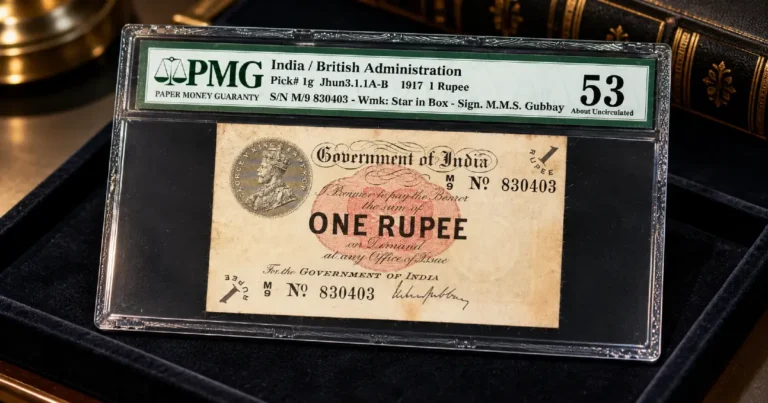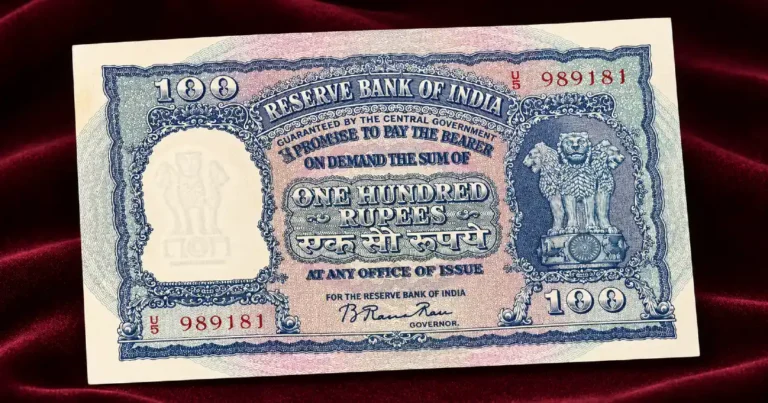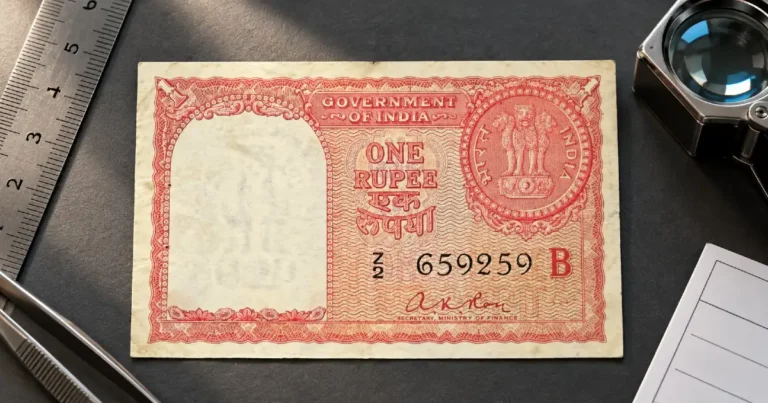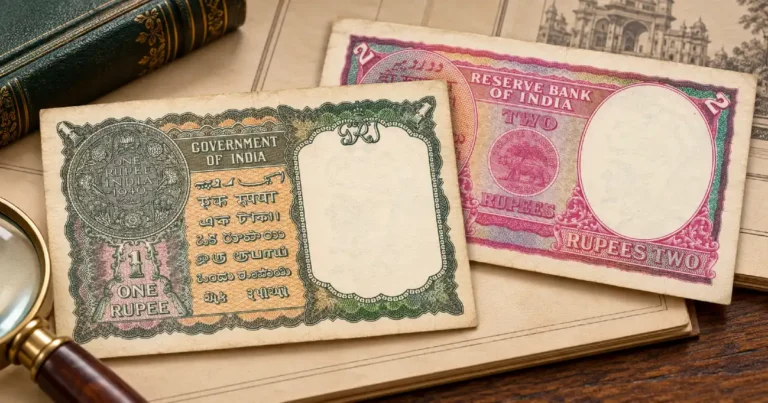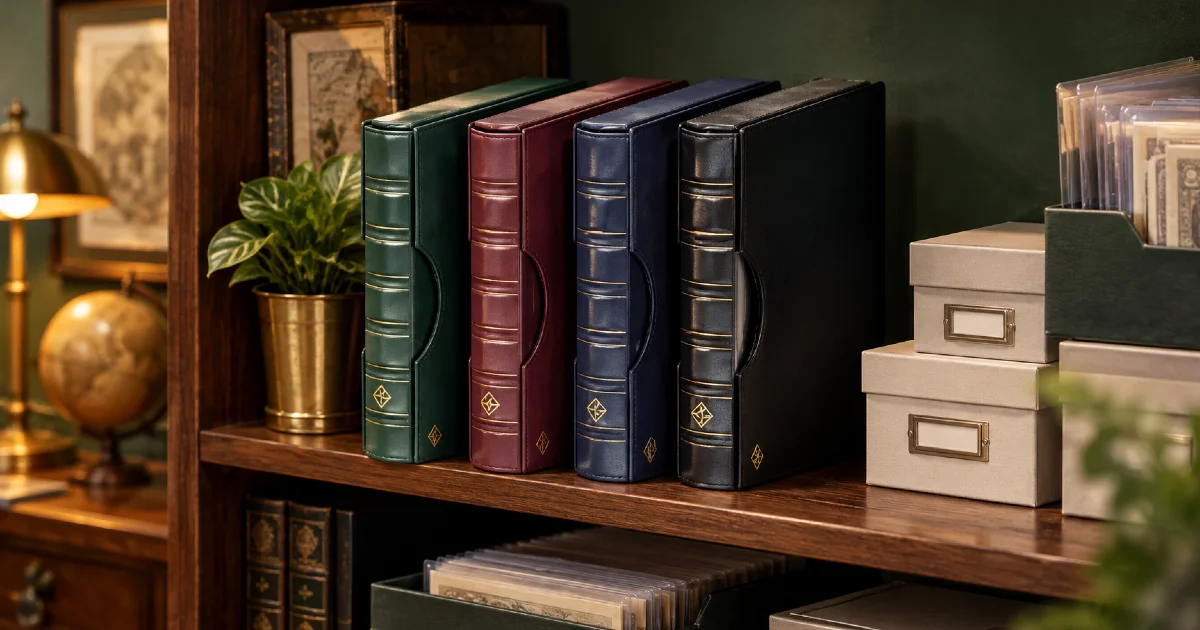
Learning how to preserve and store banknotes is essential for anyone collecting Indian paper money. Whether your collection contains an inexpensive modern Republic India note, a rare British India uniface issue or a professionally graded historical banknote, proper handling and storage can help protect its condition, appearance and long-term collectible value.
Banknotes are vulnerable to environmental damage. Humidity, sunlight, heat, dust, insects, unsuitable plastic holders and repeated handling can gradually affect their paper and printing. Even a well-preserved note may deteriorate when stored under inappropriate conditions for an extended period.
Preservation is especially important for Indian banknotes because the collecting field includes material from different historical periods, printing technologies and issuing authorities. Large British India uniface notes, King George V and King George VI portrait issues, early Republic India currency and modern RBI notes may require different sizes of storage materials, but they share the need for careful protection.
Fortunately, banknote preservation does not require expensive museum equipment. Most collectors can establish an effective storage system by selecting suitable archival materials, maintaining a stable environment, minimizing unnecessary handling and inspecting their collections periodically.
This guide explains the best practices for handling, preserving and storing Indian banknotes, including the use of archival sleeves, albums, humidity control, safe storage locations and professional conservation. It also identifies common mistakes that collectors should avoid.
If you are beginning your collection, our How to Start Collecting Indian Banknotes guide explains how to select notes, establish collecting themes and organize your acquisitions. The present article concentrates on protecting the banknotes once they are in your possession.
Table of Contents
Why Banknote Preservation Matters
Unlike coins, banknotes are relatively delicate collectibles. Most traditional Indian banknotes were produced using specialized security paper, which can be damaged by unsuitable handling, moisture, excessive light and environmental contamination.
Condition is one of the important factors influencing collector demand. A historical banknote with crisp paper, intact edges and minimal handling may be considerably more desirable than an otherwise identical example showing significant folds, stains, tears or repairs.
However, preservation should not be confused with restoration. The objective is to prevent further deterioration while maintaining the banknote in its existing condition. Attempts to make an old note appear new can cause permanent damage and reduce collector confidence.
Protecting Historical and Financial Value
Some Indian banknotes are scarce because relatively few examples survive. For such notes, maintaining their existing condition is particularly important. Damage introduced during storage may be impossible to reverse without professional treatment, and restoration itself can affect originality and market desirability.
Nevertheless, preservation cannot guarantee financial appreciation. The value of a banknote also depends on rarity, authenticity, collector demand and historical significance.
For a detailed explanation of how condition affects collectible prices, consult our Understanding Banknote Values guide.
Preserving Historical Evidence
Banknotes are historical documents as well as collectibles. Their designs, signatures, watermarks, serial numbers, inscriptions and production characteristics provide evidence of monetary and political developments.
An old note may also carry historical annotations, issuing stamps, staple holes or other characteristics associated with its previous use. These should not automatically be regarded as defects to be removed.
Appropriate preservation maintains both the physical note and the historical information it contains.
How to Handle Banknotes Safely
Proper handling is the first step in banknote preservation. Unnecessary contact can introduce dirt, oils, moisture and mechanical damage, especially around the corners and edges.
Handle Banknotes with Clean, Dry Hands
For most collectors, clean and thoroughly dry hands are suitable for handling ordinary paper banknotes. Wash your hands before examining a collection and ensure that they are completely dry before touching any notes.
Avoid applying hand cream or handling banknotes immediately after eating. Oils, moisture and food residues may transfer onto paper and contribute to staining or deterioration.
Handle notes gently by their edges where practical, while supporting larger or fragile examples across a clean surface. Do not repeatedly flex a note to test its crispness.
Are Cotton Gloves Necessary?
Cotton gloves are often associated with handling valuable collectibles, but they are not always the best choice for paper money. Gloves can reduce tactile sensitivity, catch on fragile edges and make thin paper more difficult to handle safely.
Clean, dry hands are generally preferable for routine handling of stable paper banknotes. For particularly fragile or deteriorated material, follow the advice of a qualified conservator, who may recommend specific handling precautions.
Whatever method is used, the important principle is to minimize direct contact and avoid unnecessary movement.
Use a Clean, Flat Examination Surface
Before removing a note from its holder, prepare a clean, smooth and dry surface. A suitable archival support or clean examination mat can help protect the note from scratches, dirt and accidental bending.
Keep drinks, food, pens, adhesives and sharp objects away from the examination area. Do not place banknotes directly on dusty shelves or rough wooden surfaces.
Avoid Unnecessary Removal from Holders
Repeatedly inserting and removing a note from a sleeve creates opportunities for corner bends, edge damage and accidental tearing.
Where possible, examine the banknote through its protective holder. If removal is necessary for photography or detailed inspection, support the note carefully and return it to suitable storage afterward.
Particularly fragile historical notes should be handled as little as possible.
Choosing Archival-Quality Banknote Sleeves and Holders
Using appropriate storage materials is one of the most important decisions in banknote preservation. The wrong holder can contribute to chemical damage, staining, adhesion or physical distortion over time.
Collectors should select sleeves specifically designed for long-term storage of paper documents or collectible currency, with clearly identified materials rather than relying on vague marketing descriptions.
Polyester Sleeves
Archival polyester is widely used in the preservation of paper documents. Suitable inert polyester film offers transparency, dimensional stability and physical support without requiring direct adhesion to the banknote.
High-quality polyester holders can be especially useful for valuable historical notes because the banknote remains visible while receiving protection against routine handling and abrasion.
Choose holders that are made from verified archival polyester and do not contain unsuitable coatings or adhesives in contact with the note.
Polypropylene and Polyethylene Holders
Suitable uncoated polypropylene and polyethylene products may also be used for storing paper money. These materials are generally chemically stable when manufactured appropriately for archival use.
However, not every product sold under these material names is automatically suitable for valuable banknotes. Plastic formulations, coatings and manufacturing additives can differ.
For long-term preservation, select products from reputable archival suppliers that clearly identify their composition and intended use.
Why PVC Sleeves Should Be Avoided
Soft polyvinyl chloride (PVC) holders are generally unsuitable for long-term contact with collectible banknotes. Plasticizers and other components may migrate or contribute to undesirable changes in stored materials.
Collectors should be cautious of inexpensive, flexible plastic sleeves whose composition is unknown. The fact that a product is transparent or marketed for collectibles does not necessarily make it archival quality.
Where a holder’s material cannot be verified, replacing it with a clearly identified archival product is usually the safer long-term choice.
Acid-Free Paper Enclosures
Acid-free, lignin-free paper folders and envelopes can provide suitable protection for certain historical banknotes, particularly when transparency is not required.
Archival paper materials may be buffered or unbuffered. Their suitability depends on the item being stored, including the characteristics of its paper, inks and other components.
For particularly fragile or unusual historical notes, use conservation-grade materials and seek specialist advice where the appropriate enclosure type is uncertain.
Choose the Correct Sleeve Size
A banknote holder should comfortably accommodate the complete note without forcing its edges or corners against the enclosure.
Allow modest clearance around the note, but avoid an excessively large holder that permits unnecessary movement. Different denominations and historical periods may require different sleeve dimensions.
Large British India uniface notes often require substantially larger enclosures than modern Republic India notes. Collectors should measure their notes and select holders accordingly.
Never fold a banknote merely to fit it inside a standard-sized sleeve.
How to Store Banknotes in Albums, Folders and Boxes
Once notes have been placed in suitable protective holders, they need an organized storage system that minimizes handling, physical pressure and environmental exposure.
Banknote Albums
Banknote albums are popular because they allow collectors to organize notes by historical period, denomination, issuing authority or collecting theme.
Choose albums with pages made from verified archival-safe materials. Some inexpensive album pages contain unsuitable plastic or additives that may not be appropriate for long-term paper storage.
Ensure that the pockets fit the banknotes without bending their edges. Avoid overfilling an album, which can put pressure on pages and increase the risk of damage when turning them.
Where practical, individually sleeved notes can be arranged within archival-compatible album systems for added handling protection.
Archival Storage Boxes
Archival-quality storage boxes are particularly useful for larger collections, fragile notes or items held in individual protective enclosures.
Select boxes designed for the preservation of paper documents. They should be structurally sound, appropriately sized and free from unsuitable materials that may affect the contents over time.
Boxes can reduce exposure to light and dust while helping keep the collection organized. However, they do not eliminate the need for a stable storage environment.
Horizontal Versus Vertical Storage
Stable banknotes held in suitably rigid protective enclosures may be stored vertically in appropriate boxes or album systems, provided they are adequately supported.
Large, fragile or irregularly shaped notes may benefit from horizontal storage to reduce bending and mechanical stress.
Avoid storing heavy piles of unprotected banknotes directly on top of one another. Excessive pressure, movement and repeated separation can damage edges and surfaces.
Separate Banknotes by Size and Type
Organizing a collection by denomination, historical period or physical size can make storage more practical.
For example, British India portrait notes may be kept separately from large Government of India uniface notes, while Republic India issues can be arranged by denomination or series.
The objective is to reduce unnecessary handling and ensure that large or fragile notes do not become bent or damaged by smaller, inadequately supported items.
Controlling Humidity and Temperature
Environmental conditions are among the most important factors in long-term banknote preservation. Excessive humidity, extreme dryness, high temperatures and repeated fluctuations can contribute to deterioration.
For collectors living in tropical climates, including much of India and Southeast Asia, humidity control deserves particular attention.
The Importance of Relative Humidity
Relative humidity describes the amount of moisture in the air compared with the maximum amount the air can hold at a particular temperature.
High humidity encourages mold growth and can affect paper, inks and storage materials. Excessively dry conditions may also contribute to brittleness and handling difficulties, particularly when combined with fluctuations.
For many private collections of stable paper banknotes, maintaining a moderate relative humidity of approximately 40–55% can be a practical target, provided conditions remain stable.
This is general preventive-conservation guidance rather than a universal specification for every historical material. Particularly fragile or unusual items may require specialist recommendations.
Avoid Rapid Humidity Changes
Sudden fluctuations can cause paper and other materials to expand and contract as they absorb or release moisture.
A reasonably stable environment is generally more desirable than repeatedly moving a collection between very dry and humid conditions.
Collectors should avoid placing albums near bathroom walls, kitchens, open windows or locations affected by condensation and seasonal dampness.
Temperature Control
High temperatures can accelerate chemical deterioration of paper and storage materials. Temperature also influences humidity and the potential for condensation.
A cool, comfortable indoor environment with minimal temperature fluctuation is generally suitable for most private banknote collections.
Avoid storing notes in attics, vehicles, near heaters or in other locations exposed to excessive heat. Likewise, do not place notes directly against cold surfaces where condensation may occur.
Using a Hygrometer
A small digital hygrometer can help collectors monitor the temperature and relative humidity of their storage area.
Monitoring conditions over time is more useful than relying on a single reading. Seasonal changes, air-conditioning patterns and periods of heavy rainfall can affect the environment.
Where necessary, an appropriately operated dehumidifier or climate-control system can help maintain more stable conditions.
Should Silica Gel Be Used?
Silica gel and other moisture-control products may be useful within suitably designed storage systems, but they should not be treated as substitutes for environmental monitoring.
Uncontrolled desiccants in a small sealed container can create excessively dry conditions or become ineffective without the collector realizing it.
If silica gel is used, it should be appropriately contained, kept away from direct contact with the banknotes and managed according to the storage system’s actual humidity requirements.
Protecting Banknotes from Sunlight and Ultraviolet Light
Light exposure can gradually damage paper and printed designs. Ultraviolet radiation is particularly harmful, but prolonged exposure to visible light may also contribute to fading and deterioration.
Why Direct Sunlight Is Harmful
Direct sunlight can cause fading, discolouration and heating of banknotes and their storage materials.
These changes may be irreversible. A banknote should therefore not be displayed permanently in a sunlit window or on a wall receiving direct daylight.
Safe Display Practices
Collectors who wish to display banknotes should use suitable archival mounting materials and protective glazing where appropriate.
UV-filtering glazing can reduce exposure to ultraviolet radiation, but it does not eliminate damage from visible light or make continuous display risk-free.
Consider displaying high-quality reproductions rather than rare original notes, especially when an item would otherwise receive prolonged illumination.
Limiting Exposure During Photography
Occasional photography under appropriate lighting is generally preferable to prolonged display. Avoid unnecessary exposure to intense lights or heat-producing equipment.
Photograph both sides carefully without pressing the note against unsuitable materials or repeatedly repositioning fragile examples.
After photography, return the banknote to its protective enclosure and normal storage location.
Special Preservation Considerations for Indian Banknotes
Indian paper money includes a wide variety of materials from different historical periods. While general conservation principles apply throughout the field, some issues deserve additional care because of their size, age or unusual characteristics.
British India Uniface Banknotes
Early Government of India uniface notes can be relatively large, fragile and historically important. Some surviving examples show previous folds, annotations, spindle holes or other signs of historical handling.
These notes should be supported carefully and stored in appropriately sized archival holders. Avoid repeated removal from their enclosures and do not attempt to flatten historical folds.
For especially fragile notes, a rigid archival support or professionally designed enclosure may offer additional protection.
Our British India Banknotes collection provides historical context for these issues.
King George V and King George VI Banknotes
British India portrait banknotes may survive with varying degrees of circulation wear and storage damage. High-grade examples are particularly vulnerable to new handling marks, corner bends and folds.
Historical staple holes and annotations should be documented rather than automatically removed or altered.
Collectors should select holders that provide adequate support without exerting pressure on fragile edges or corners.
Early Republic India Banknotes
Early Republic India issues are often encountered with staple holes and other signs associated with historical banking and currency-handling practices.
Collectors should avoid trying to close staple holes, remove associated marks or repair areas affected by earlier handling.
Where rust staining or paper weakness is present, the note should be protected from further damage and assessed by a qualified conservator if treatment is being considered.
Historical Overprints and Specimen Notes
Some Indian and related currency issues feature official overprints, specimen markings, unusual serial arrangements or other identifying features.
These characteristics may be central to the note’s attribution and value. Never attempt to improve the appearance of an overprint, remove an official annotation or alter a specimen marking.
For valuable examples, maintain photographs and acquisition records showing the original condition and inscriptions.
Modern Republic India Banknotes
Modern Indian notes may be easier to replace than scarce historical issues, but preserving their condition remains important for collectors of signatures, varieties, fancy serial numbers and errors.
When collecting uncirculated modern notes, minimize unnecessary handling and avoid stacking them without suitable support.
Collectors of genuine error notes should also preserve the original defect. Unusual folds, additional paper or irregular edges should never be trimmed or corrected.
How to Store PMG-Graded and Other Certified Banknotes
Professionally graded banknotes are normally encapsulated in protective holders that allow the note and certification details to be examined without direct handling.
Although these holders provide useful physical protection, they do not eliminate environmental risks.
Protecting Certified Holders
Store certified notes in a clean, stable environment away from direct sunlight, excessive humidity and high temperatures.
Use storage boxes or other supports designed to accommodate the dimensions of the holders without bending or placing excessive pressure on them.
Keep holders away from abrasive surfaces that could cause scratches or obscure the certification information.
Avoid Opening Certified Holders
Do not open or tamper with a certified banknote holder simply to examine the note more closely. Opening a holder can compromise the certification status and expose the banknote to handling risks.
If a holder is damaged, contact the grading service to determine the appropriate reholdering procedure.
For a discussion of professional authentication and grading decisions, see Should You Submit Indian Banknotes to PMG?.
Certified Holders Are Not a Substitute for Proper Storage
A grading holder should not be treated as a universal barrier against moisture, heat, sunlight or other environmental hazards.
The same basic preservation principles apply to certified and uncertified banknotes: minimize unnecessary handling, avoid extreme conditions and maintain an appropriate storage environment.
Should Banknotes Be Stored in a Safe or Bank Deposit Box?
Collectors with valuable collections may consider a home safe, secure storage cabinet or bank safe-deposit facility. These options can reduce certain security risks, but their environmental conditions must also be considered.
Home Safes
A suitable safe may provide protection against unauthorized access and certain physical hazards. However, safes vary considerably in construction, fire resistance and moisture characteristics.
Some fire-resistant safes contain insulation materials that can retain or release moisture under particular conditions. A tightly enclosed compartment may therefore develop an unsuitable humidity level if not monitored.
Do not assume that a fire-resistant safe automatically provides ideal long-term preservation conditions for paper collectibles.
Bank Safe-Deposit Boxes
Safe-deposit facilities may offer additional protection from theft and unauthorized access. However, environmental control, flood protection, access conditions and insurance arrangements vary by institution.
Collectors should investigate these conditions before placing valuable paper money in long-term storage.
A secure location is beneficial only when the banknotes are also stored in suitable archival enclosures and protected from environmental damage.
Insurance and Inventory Records
For valuable collections, maintain an inventory containing descriptions, photographs, serial numbers, acquisition details and relevant certification information.
Consider appropriate insurance coverage where available. Review policy terms carefully because ordinary household policies may have exclusions or limits affecting collectibles and currency.
Keep secure backup copies of important records separately from the physical banknotes.
Common Banknote Preservation Mistakes to Avoid
Many banknotes suffer damage not from circulation but from unsuitable attempts at storage, cleaning or improvement. Avoiding these mistakes is often more important than purchasing expensive accessories.
Using Ordinary Plastic Sleeves
Do not assume that every transparent sleeve is suitable for long-term preservation. Some plastic products contain additives or coatings that may interact with paper and inks.
Choose verified archival materials from reputable suppliers, particularly for rare or valuable notes.
Laminating Banknotes
Never laminate a collectible banknote. Heat, pressure and adhesive layers can permanently alter the item and make future conservation extremely difficult.
Lamination is not equivalent to placing a note in a removable archival sleeve or a professional certification holder.
Ironing or Pressing Banknotes
Do not iron a banknote to remove folds or make it appear uncirculated. Heat and pressure may alter the paper, damage inks and change its original physical characteristics.
Flattening a circulated note does not restore it to its original uncirculated condition. Professional grading services may identify signs of pressing or other treatment.
Washing or Chemical Cleaning
Never wash banknotes with water, detergents, bleach, solvents or household cleaning products.
Such treatments may cause ink loss, staining, discolouration or deterioration. They can also produce abnormal appearances resembling genuine missing-print errors.
Cleaning attempts may substantially reduce collector confidence even when the note initially appears brighter.
Using Adhesive Tape, Glue or Paper Clips
Adhesive tape and glue can leave permanent residues, staining or structural damage. Metal paper clips may cause impressions, rust marks or tears.
Do not attach labels directly to collectible banknotes. Keep identification information on the outside of the protective enclosure or in a separate catalogue.
Excessive Handling and Repeated Inspection
Repeatedly examining a note outside its holder increases the likelihood of accidental folds, edge wear and contamination.
Use photographs, catalogue records and transparent sleeves to reduce the need for direct handling, especially when dealing with high-grade or fragile historical notes.
When Should You Consult a Professional Paper Conservator?
Preventive preservation is suitable for most collectors, but some problems require specialist conservation knowledge.
A qualified paper conservator may be appropriate when a valuable banknote is suffering from active deterioration, severe structural damage, mold contamination or earlier unsuitable repairs.
Tears, Splits and Fragile Paper
Historical notes may develop tears, fold splits or weakened areas. Attempting to repair these with adhesive tape or household glue can cause further damage.
Professional conservation may help stabilize a fragile note, but any treatment should be considered carefully in light of its historical significance and collectible value.
Mold and Biological Damage
Mold can develop where paper is exposed to excessive moisture. Suspected mold should be taken seriously because it may threaten both the affected banknote and nearby collection materials.
Do not brush, vacuum, spray or apply household mold removers to valuable banknotes without appropriate conservation guidance.
Isolate potentially affected material safely, avoid unnecessary handling and seek professional advice where contamination is suspected.
Should Historical Stains or Annotations Be Removed?
Not necessarily. Some marks are part of a banknote’s historical record, while others may have arisen through circulation or previous storage.
Removing an annotation, attempting to eliminate staining or altering the appearance of the note can compromise its authenticity or historical information.
For collectible currency, conservation decisions should prioritize stabilization and preservation rather than cosmetic improvement.
The International Institute for Conservation provides information about the professional conservation field at iiconservation.org.
Protecting Banknotes from Flooding, Fire and Other Emergencies
Even a carefully stored collection can be threatened by unexpected events. Flooding, water leaks, fire, insects and structural damage may create urgent preservation problems.
Preparing for Water Damage
Store collections away from floors, plumbing, leaking walls and locations vulnerable to flooding. Elevated cabinets or shelving can reduce exposure to certain water-related hazards.
When using storage boxes, consider the wider environment rather than relying on an enclosure to provide complete waterproof protection.
What If Banknotes Become Wet?
Wet paper can be extremely fragile. Ink may also be vulnerable to movement, bleeding or other changes depending on the issue.
Do not rub, iron, press or apply direct heat to wet banknotes. Avoid separating sheets that have become stuck together by force.
For valuable or fragile notes, seek professional conservation guidance promptly. The appropriate treatment depends on the paper, inks, extent of wetting and any contamination.
Fire and Smoke Exposure
Fire can damage banknotes through heat, combustion, smoke and water used during firefighting.
Collectors should not assume that a safe or storage cabinet guarantees complete protection in a major fire. Appropriate fire-resistant storage, insurance and off-site records can help reduce certain risks.
Pests and Insects
Insects and other pests may damage paper-based materials, particularly when storage areas are dirty, damp or contain food residues.
Maintain clean storage surroundings and inspect boxes or cabinets for signs of insect activity.
Never apply household insecticides directly to collectible banknotes or their holders. If an infestation is suspected, obtain appropriate conservation or pest-management advice.
Documenting and Monitoring Your Banknote Collection
Long-term preservation involves more than choosing suitable storage materials. Accurate documentation helps collectors monitor condition, identify changes and maintain a reliable record of their holdings.
Maintain a Banknote Inventory
Keep a catalogue recording the issuing authority, denomination, issue, signature, prefix, serial number, grade and relevant catalogue reference.
Purchase information, provenance and certification numbers should also be retained where available.
A spreadsheet or digital catalogue can make this information easier to organize and update.
Photograph Both Sides
Clear photographs of the obverse and reverse provide a useful visual record of a banknote’s condition at the time of acquisition.
They may assist with identification, insurance documentation or comparison if deterioration occurs later.
Images should represent the note accurately. Avoid filters or adjustments that conceal stains, folds or other condition characteristics.
Inspect Storage Conditions Periodically
Check the storage area periodically for humidity changes, condensation, insects, dust or damage to the containers.
Also inspect protective holders for deterioration, unexpected adhesion or other signs that the storage materials may be unsuitable.
These checks should be carried out without unnecessarily removing every banknote from its enclosure.
Replace Unsuitable Storage Materials
If banknotes are stored in unidentified soft plastic, damaged albums or unsuitable envelopes, consider transferring them to verified archival-quality materials.
Take care when removing old holders, particularly if a note appears to be sticking to the enclosure. Do not pull a fragile banknote away from adhered plastic or paper without appropriate advice.
A Practical Banknote Storage System for Collectors
An effective preservation system does not need to be complicated. For most private collections, the objective is to combine appropriate individual protection with organized storage and stable environmental conditions.
For Small Beginner Collections
Collectors with a small number of notes can begin with suitable archival sleeves and a quality banknote album or storage box.
Arrange the notes by denomination, historical period or another preferred collecting theme. Keep the album in a clean, dry, stable indoor location away from direct sunlight.
A simple inventory and occasional environmental checks are usually sufficient for a modest, stable collection.
For Larger Specialist Collections
A larger collection may benefit from individual archival holders, separate boxes for different note sizes and a more detailed digital inventory.
Consider monitoring temperature and humidity, especially in tropical climates or rooms where environmental conditions vary seasonally.
Particularly valuable notes may warrant additional security arrangements and insurance coverage.
For Rare and Fragile Historical Notes
Rare British India uniface notes, fragile historical issues and banknotes with unusual shapes or damaged edges may require individually designed storage arrangements.
The priority should be physical support, limited handling and preservation of existing historical characteristics.
When there is uncertainty about the appropriate enclosure or a note shows active deterioration, seek qualified conservation advice before attempting treatment or rehousing.
Conclusion: How to Preserve and Store Banknotes Safely
Understanding how to preserve and store banknotes is an essential part of responsible Indian paper money collecting. Suitable archival sleeves, careful handling, appropriate storage containers and a stable environment can significantly reduce the risk of avoidable deterioration.
The most important principles are straightforward: minimize direct handling, avoid unsuitable plastics, protect notes from excessive humidity and light, and never attempt to improve their appearance through washing, ironing, pressing or amateur repairs.
Collectors of historical Indian banknotes should also consider the characteristics of particular issues. Large Government of India uniface notes, British India portrait currency, early Republic India notes, specimens and certified banknotes may benefit from different storage arrangements, but all should be protected against unnecessary damage.
Preservation is not about making old banknotes look new. It is about protecting their present condition, originality and historical information for future collectors.
For further guidance, explore our How to Grade Banknotes article to understand how condition is assessed, or consult the Banknote Grading Scale for traditional and numerical grades.
Frequently Asked Questions About Banknote Preservation and Storage
What is the best way to preserve and store banknotes?
The best approach is to place banknotes in suitable archival-quality sleeves or holders and store them in a clean, stable environment away from direct sunlight, excessive humidity, heat and unnecessary handling. Valuable or fragile notes may require additional physical support.
Which plastic sleeves are safe for banknotes?
Suitable archival polyester, uncoated polypropylene and polyethylene products can be appropriate for long-term banknote storage when manufactured to archival specifications. Avoid unidentified plastics and soft PVC-containing sleeves.
Should I use gloves when handling banknotes?
Clean, dry hands are generally preferable for routine handling of stable paper banknotes. Cotton gloves can reduce tactile sensitivity and catch on fragile edges. Particularly delicate items may require specialized handling methods recommended by a conservator.
What humidity is best for storing banknotes?
For many private collections of stable paper banknotes, approximately 40–55% relative humidity is a practical target. Maintaining reasonably stable conditions is important, and particularly fragile historical materials may require specialist advice.
Can I store banknotes in a banknote album?
Yes. Banknote albums can provide convenient organization and protection if their pages and pockets are made from suitable archival materials. Avoid overfilling albums and ensure that notes fit without bending their edges or corners.
Is it safe to laminate old banknotes?
No. Lamination can permanently change the banknote through heat, pressure and adhesives. Use removable archival sleeves or suitable protective holders instead.
Can I iron a banknote to remove folds?
No. Ironing and pressing can damage paper and inks and alter original characteristics. Flattening a circulated banknote does not restore it to uncirculated condition and may reduce collector confidence.
Should I clean stained or dirty banknotes?
Collectors should not attempt to clean banknotes using water, chemicals, detergents or household products. Such treatment may damage the paper or printing. For valuable notes with serious condition problems, consult a qualified paper conservator.
How should I store British India uniface banknotes?
Large or fragile uniface notes should be stored in appropriately sized archival enclosures that support the entire note without folding. Minimize handling and avoid attempts to remove historical folds, spindle holes, annotations or other identifying characteristics.
Do PMG holders protect banknotes from humidity?
PMG holders provide physical protection and reduce direct handling, but they should not be assumed to offer complete protection against humidity, heat, sunlight or other environmental hazards. Certified notes should still be stored under suitable conditions.
Is it safe to store banknotes in a home safe?
A home safe can provide security, but its environmental conditions should be monitored. Some safes may retain moisture, and fire resistance does not necessarily mean that the interior is suitable for long-term paper storage.
What should I do if my banknotes become wet?
Avoid rubbing, ironing, heating or forcibly separating wet banknotes. Wet paper can be fragile, and inks may be vulnerable to damage. Seek prompt professional conservation advice for valuable or severely affected notes.
How often should I inspect my banknote collection?
Inspect the storage area periodically for changes in humidity, condensation, pests or damage to containers. Examine banknotes through their holders where possible to avoid unnecessary handling. More frequent environmental checks may be needed in tropical or seasonally humid locations.
Does proper storage increase the value of banknotes?
Proper storage helps preserve existing condition and may prevent damage that would otherwise reduce value. It does not guarantee appreciation, since banknote prices also depend on rarity, authenticity, historical significance and collector demand.