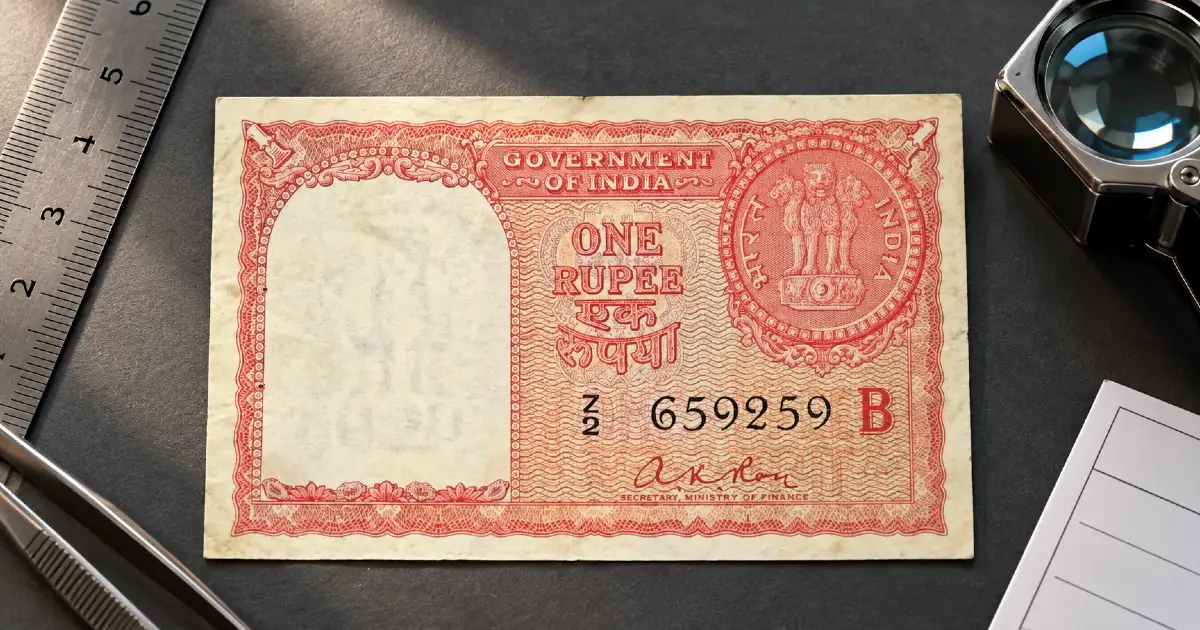
Learning how to grade banknotes is one of the most useful skills a paper money collector can develop. Condition affects a banknote’s appearance, desirability and often its market value. Two notes of exactly the same denomination, design and signature may command very different prices simply because one has survived in better condition.
For collectors of Indian paper money, grading can be particularly interesting. British India notes, early Republic India issues and modern RBI currency have different histories of circulation, handling and preservation. Understanding their physical condition helps collectors recognize desirable examples, evaluate purchase descriptions and make informed collecting decisions.
Banknote grading is the process of assessing a note’s state of preservation. It involves examining folds, creases, corners, edges, surface wear, stains, tears and overall appearance. The objective is to describe the note’s condition consistently rather than simply deciding whether it looks attractive.
This practical guide explains how to inspect an Indian banknote, recognize the main signs of circulation and estimate an appropriate traditional grade. For detailed descriptions of the complete numerical grading system, consult our Banknote Grading Scale reference page.
Table of Contents
Why Learning to Grade Banknotes Matters
Collectors frequently encounter descriptions such as Uncirculated, Extremely Fine, Very Fine and Fine. These terms have recognized meanings in paper money collecting and should not be used merely as general descriptions of attractiveness.
A note described as Uncirculated should not display genuine circulation folds. A Very Fine note, by contrast, has experienced visible circulation but retains an acceptable overall appearance. Understanding this difference is essential when comparing prices or purchasing notes from photographs.
Grading also helps collectors identify improvement opportunities within their collections. A collector may decide to replace a heavily circulated note with a better example, or may deliberately accept a lower grade because the historical issue is scarce and expensive.
However, condition and rarity are separate characteristics. A common banknote in excellent condition is not automatically more valuable than a rare historical note in moderate condition.
Developing grading skills allows collectors to recognize these differences and avoid paying high-grade prices for notes that show significant wear.
Preparing to Examine a Banknote
Accurate banknote grading begins with a careful examination under suitable conditions. The objective is to identify existing wear without causing further damage.
Use Suitable Lighting
Examine the banknote under bright, even lighting. Natural daylight or a suitable neutral-white light source can help reveal folds, stains, ink wear and irregularities.
Change the viewing angle to identify creases or handling marks that may be difficult to see when looking directly at the note. Reflected light is particularly useful for detecting folds in otherwise attractive examples.
A transmitted light source can help reveal pinholes, paper thinning, tears and some repairs. However, no single lighting method reveals every condition problem.
Examine Both Sides
Never assign a grade after examining only the front of a banknote. A note may have an attractive obverse but show staining, folds, annotations or other defects on the reverse.
Inspect both sides in full, including the watermark area, margins and corners. The final assessment should reflect the condition of the complete banknote.
Use Magnification When Necessary
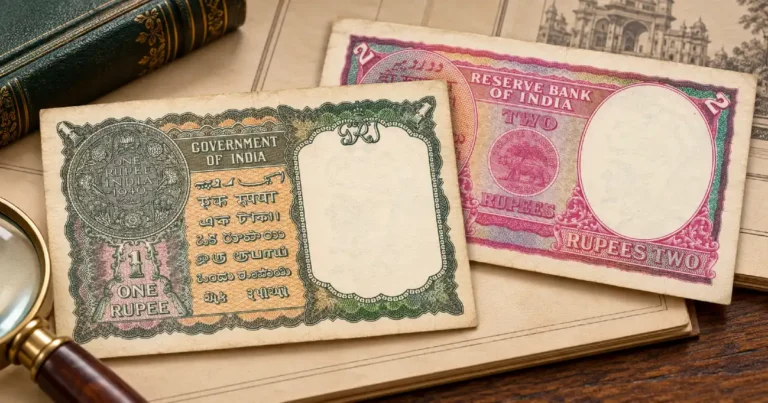
A magnifying glass or loupe can help identify small edge splits, pinholes, surface marks and repairs. It is especially useful when evaluating high-grade notes where apparently minor imperfections can matter.
Magnification should supplement normal visual inspection rather than replace it. Overall eye appeal is best evaluated by viewing the complete note at an ordinary distance.
Identifying Folds, Creases and Handling Marks
Folds and creases are among the most important characteristics in traditional banknote grading. They provide evidence of circulation, storage or handling and often determine whether a note can properly be described as Uncirculated.
Central and Horizontal Folds
A central fold is common on circulated banknotes because notes are frequently folded for carrying or storage. It may run vertically, horizontally or in both directions.
A strong central fold can be visible from both sides and may produce additional wear along the fold line. On heavily circulated notes, repeated folding can weaken the paper and eventually cause splitting.
When grading, consider the number of folds as well as their severity. One light fold and several heavy folds should not be treated as equivalent conditions.
Light Creases and Corner Folds
A light crease may result from brief handling or storage. Such marks can be difficult to detect from ordinary photographs, especially when the note is otherwise clean and attractive.
Corner folds are also important. A small corner fold may have less visual impact than a heavy central crease, but it remains evidence that the note has been bent.
Collectors should distinguish actual folds from minor surface undulations or printing characteristics that may not represent circulation wear.
Handling Marks Without Obvious Folds
Some banknotes have no obvious folding but show signs of handling, including minor bends, softened corners or small surface disturbances.
These characteristics may prevent a note from qualifying for the highest numerical grades even when it remains broadly uncirculated.
For this reason, the absence of a central fold does not automatically make a banknote a Gem Uncirculated example.
Examining Corners, Edges and Margins
Corners and edges often reveal how much handling a banknote has experienced. They should be assessed separately from the main printed design.
Sharp and Rounded Corners
Sharp, well-preserved corners can support a higher condition assessment, particularly on notes that otherwise show little circulation.
Repeated handling may gradually round the corners or produce small bends and softened tips. Heavily circulated notes frequently have noticeably rounded or damaged corners.
However, the expected appearance of corners should be considered in relation to the issue. Some historical banknotes were manufactured or separated differently from modern machine-cut notes.
Edge Wear and Small Tears
Examine the entire perimeter for fraying, minor tears, splits and missing pieces. Even small defects can become important when evaluating an otherwise high-grade note.
For lower-grade examples, modest edge damage may be consistent with extensive circulation. More substantial tears and missing sections can significantly reduce the overall assessment.
Margins and Centring
Centring describes the position of the printed design relative to the edges of the banknote. A well-centred example generally has balanced margins, although the intended layout differs between issues.
Poor centring can prevent a note from receiving a very high numerical grade even when it shows no circulation folds.
Importantly, an off-centre design is not automatically a production error. Some variation may be normal for the issue, and the grading significance depends on severity and the applicable standards.
Evaluating Colour, Printing and Overall Eye Appeal
Eye appeal describes the overall visual impression of a banknote. It includes the balance of the design, the condition of printed elements and the presence of distracting marks or damage.
Colour and Printed Design
Look for uneven fading, worn printed areas, stains and discolouration. Compare the note with reliable examples of the same issue when possible.
Different historical printings can show legitimate colour variations, so a difference in shade does not necessarily indicate poor condition or damage.
Conversely, an apparently bright note should not automatically receive a high grade if it has significant folds, tears or other defects.
Cleanliness and Surface Marks
Circulated notes may develop general soiling, fingerprints, small stains and other marks. The number, location and severity of these defects contribute to the overall grade.
A small isolated mark may have less impact than extensive staining across the main design, but the final assessment depends on all characteristics together.
Attractiveness Is Not the Same as Grade
An older circulated note may have excellent eye appeal despite a moderate numerical grade. Likewise, a technically uncirculated note may be poorly centred or show distracting handling marks.
Collectors should appreciate attractive banknotes while maintaining a distinction between subjective visual appeal and a consistent assessment of physical condition.
Recognizing Pinholes, Staple Holes, Stains and Repairs
Beyond ordinary circulation folds, banknotes can exhibit defects that affect their grade or require additional description.
Pinholes and Staple Holes
Pinholes are small perforations that may result from handling, storage or historical practices. Staple holes are particularly familiar to collectors of older Indian paper money because banknotes were commonly distributed or stored in stapled packets.
The significance of such holes depends on their origin, number, location and the issue concerned. Collectors should not automatically equate an issuance-related characteristic with careless later damage, but neither should they assume that every staple hole is exempt from grading consequences.
Professional grading services consider the characteristics of the particular issue when assessing such defects.
Spindle Holes and Historical Handling Marks
Some historical banknotes may show spindle holes, mounting evidence or annotations associated with earlier methods of handling and recordkeeping.
These characteristics should be described accurately rather than automatically treated as contemporary circulation damage. Nevertheless, they can affect the condition assessment and collector desirability.
Stains, Foxing and Rust
Stains may originate from moisture, contact with other materials or environmental exposure. Rust marks can occur near staple holes, while foxing may appear as scattered brownish spotting.
These defects can detract from eye appeal and influence grading, particularly where the staining is extensive or affects important design elements.
Tears, Repairs and Adhesive Tape
Tears and missing sections reduce condition, while repairs can complicate assessment. Adhesive tape, backing material and other added substances may also cause long-term damage.
Collectors should examine both sides carefully because some repairs are less visible from the front. If substantial restoration is suspected, avoid assigning an optimistic grade without specialist examination.
The methods used to preserve and store collectible notes are discussed separately in our How to Preserve and Store Banknotes guide.
How to Estimate a Banknote’s Grade
After completing the physical examination, the next step is to decide which traditional grade best reflects the banknote’s overall condition.
A practical approach is to identify the broad condition level first, then refine the assessment using the severity of folds, the quality of the edges and corners, any defects and the overall appearance. For internationally recognized descriptions of traditional condition grades, collectors can refer to the International Bank Note Society (IBNS) Grading Standards.
Uncirculated (UNC)
An Uncirculated banknote has no genuine circulation folds. Nevertheless, uncirculated examples can differ significantly in centring, handling marks, margins and eye appeal.
Collectors should not assume that every note without visible folds qualifies for the highest possible numerical grade.
About Uncirculated (AU or aUNC)
An About Uncirculated note shows limited evidence of handling or very light circulation. It may have a small number of light folds or other minor signs that prevent it from being classified as fully Uncirculated.
Such notes can remain highly attractive and may be excellent collecting examples, particularly for historical types where truly uncirculated survivors are scarce.
Extremely Fine (EF or XF)
Extremely Fine notes show relatively light circulation. They typically retain strong overall appearance but have recognizable folds or creases and some handling wear.
The precise severity and number of folds matter. An especially attractive EF example may appear close to About Uncirculated in a photograph, making careful inspection important.
Very Fine (VF)
Very Fine notes show moderate circulation with multiple folds and visible handling. The principal design should remain reasonably clear, and the banknote should still have satisfactory overall integrity.
VF is an important collecting grade because many historical issues are obtainable in this condition even when higher-grade examples are expensive or difficult to find.
Fine (F) and Lower Grades
Fine banknotes exhibit significant circulation, including numerous folds and general wear. Lower grades show progressively heavier wear, staining, tears or missing portions.
These notes can still be historically desirable, particularly when the underlying issue is rare. A lower grade should be described accurately rather than dismissed as lacking collecting interest.
For a full comparison of the numerical grades from 1 to 70, traditional equivalents and professional designations, consult our Banknote Grading Scale.
Grading British India and Republic India Banknotes
Although grading principles are broadly applicable to different currencies, Indian paper money presents several historical characteristics that collectors should understand.
British India Uniface Notes
Early British India uniface notes were produced using manufacturing methods and formats different from those of modern RBI currency. Some are large and fragile, while many surviving examples show significant handling or historical wear.
Collectors should examine margins, folds, writing, spindle holes and repairs carefully. The physical characteristics expected for the particular note type should guide the assessment.
For rare uniface notes, accepting a circulated example may be a practical collecting decision because higher grades can be exceptionally difficult to obtain.
King George V and King George VI Notes
Portrait banknotes of King George V and King George VI are important collecting fields. Condition differences can have substantial market consequences, especially for scarce signatures, denominations and varieties.
Collectors should pay close attention to folds crossing the portrait, marginal wear, staple holes, staining and the general clarity of printed details.
High-grade examples can be particularly desirable, but a well-preserved circulated note may still represent an excellent addition to a historically focused collection.
Early Republic India Notes
Early Republic India notes offer many interesting denomination and signature combinations. Some issues are readily available in circulated condition, while particular varieties and exceptional grades may be much harder to obtain.
Staple holes, handling, centring and folds may be especially relevant when comparing apparently similar examples.
Modern Republic India Notes
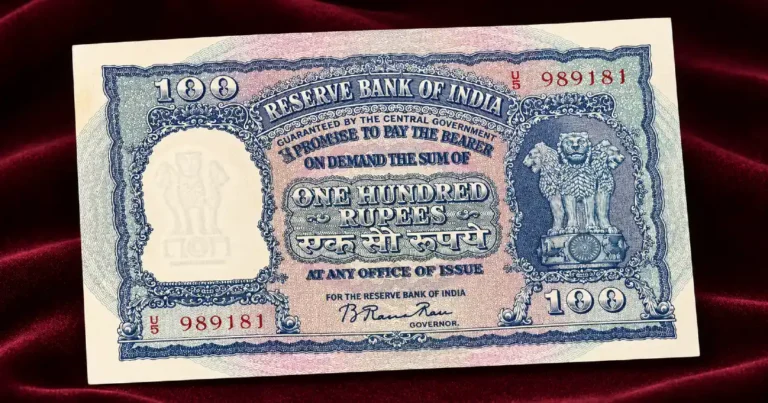
For common modern notes, high condition standards may be especially important because uncirculated examples can be relatively accessible. Minor handling marks, folds or poorly preserved corners can make an otherwise common note less desirable.
However, modern notes with recognized errors, special serial numbers or unusual varieties may attract collectors for reasons beyond ordinary condition.
Common Mistakes When Grading Banknotes
Even experienced collectors can disagree about borderline grades. Several common mistakes contribute to inaccurate descriptions.
Grading from One Photograph
A single photograph may conceal folds, surface marks or defects on the reverse. For expensive purchases, request clear images of both sides and additional angled photographs where necessary.
Confusing Cleanliness with Condition
A clean-looking note may still have multiple folds. Conversely, an attractive circulated note may show modest soiling without severe structural wear.
Grade the physical condition as a whole rather than relying on brightness or colour alone.
Ignoring Minor Folds
A light fold can be enough to change a note’s grade category. When comparing notes advertised as Uncirculated, examine the surface from different angles and pay particular attention to the corners.
Overgrading Your Own Collection
Collectors naturally develop attachments to their notes. However, sentimental value should not influence the physical grade assigned to an item.
For consistency, compare each note against established standards and consider a conservative assessment where the evidence is uncertain.
Assuming a Rare Note Must Be High Grade
Rarity and condition are separate. A scarce banknote does not deserve a higher grade merely because few examples survive.
Likewise, a common note with an excellent grade does not become historically rare. Its desirability must be evaluated through both condition and market demand.
When Should You Seek Professional Banknote Grading?
Learning how to grade banknotes yourself is valuable, but some situations justify an independent professional assessment.
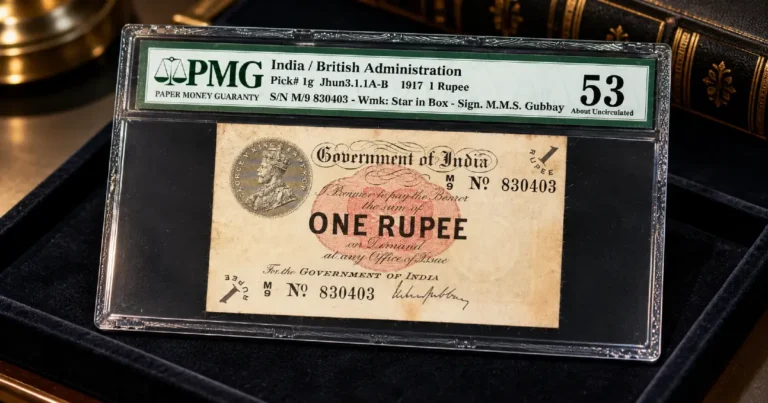
Professional grading may be useful when a note is particularly rare, expensive, difficult to authenticate or being prepared for sale to collectors who prefer certified examples.
A grading service can evaluate authenticity and condition using standardized procedures. However, professional grading involves costs, and not every banknote benefits sufficiently to justify submission.
The decision is especially relevant for scarce British India notes, high-grade historical issues and certain special varieties.
For a detailed discussion of which notes are worth submitting, associated costs, population reports and practical decision criteria, read Should You Submit Indian Banknotes to PMG?.
Conclusion: How to Grade Banknotes with Confidence
Learning how to grade banknotes requires careful observation and experience. The most important steps are to examine both sides, identify folds and handling, assess corners and edges, recognize stains or repairs and evaluate the overall condition against established grading standards.
For Indian banknotes, historical production and circulation practices must also be considered. Characteristics found on early Government of India notes, British India portrait currency and Republic India issues may differ considerably.
A consistent, realistic approach will help collectors compare notes accurately and make better purchasing decisions. Where authenticity or condition remains uncertain, independent professional assessment may be worthwhile.
Use our Banknote Grading Scale for detailed grade definitions and consult Understanding Banknote Values to explore how condition interacts with rarity and collector demand.
Frequently Asked Questions About Grading Banknotes
How do I grade a banknote?
Examine both sides under suitable lighting, identify folds and creases, inspect corners and edges, assess stains or repairs and compare the overall condition with established grading standards. Begin with a broad traditional grade before attempting a precise numerical assessment.
What is the difference between UNC and AU banknotes?
Uncirculated notes have no circulation folds, although minor manufacturing or handling characteristics may affect their numerical grade. About Uncirculated notes show limited evidence of handling or light circulation, often including one or more minor folds.
Do staple holes affect the grade of Indian banknotes?
They can. Some older Indian notes have staple holes associated with historical issuing or handling practices. Their effect depends on the origin, number and severity of the holes and the grading standards applied to the particular issue.
What does Very Fine mean in banknote grading?
Very Fine describes a circulated note with visible folds and handling but generally satisfactory structural integrity and recognizable design details. The numerical scale distinguishes several levels within the VF category.
Can I grade a banknote from photographs?
Photographs can help estimate condition but may conceal light folds, repairs or defects. A reliable assessment is easier when both sides can be examined directly under appropriate lighting.
Does a higher banknote grade always mean a higher value?
Higher grades often attract premiums for the same banknote variety, but value also depends on rarity, authenticity and collector demand. A rare circulated note may be worth considerably more than a common uncirculated example.
Should beginners submit every banknote for grading?
No. Beginners can learn to evaluate ordinary notes themselves. Professional grading is more useful when authenticity, rarity, condition or potential resale value justify the cost.