
Indian Banknote Collecting Themes: Ideas & Examples
Explore Indian banknote collecting themes and ideas for beginners. Learn how to build a focused collection using history, serial numbers & rare note categories.
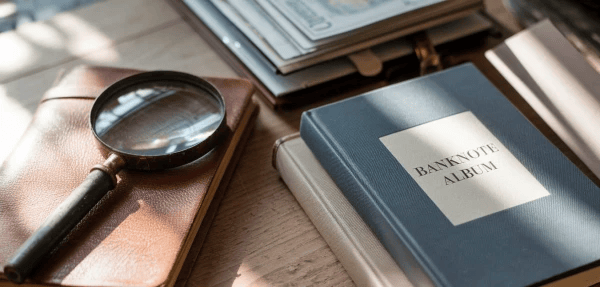

Collecting Indian banknotes is an engaging hobby that combines history, design, and long-term value. With banknotes spanning British India, Republic India, colonial territories, and modern issues, collectors have a wide range of options to explore. However, without a clear focus, beginners often find themselves building unstructured collections that are difficult to manage or expand.
Choosing a collecting theme helps bring clarity and direction to your collection. Whether you focus on historical periods, denominations, rare features, or specialised categories such as fancy serial numbers and error notes, a well-defined theme makes collecting more organized and rewarding. It also allows you to develop deeper knowledge and make more informed decisions when acquiring new notes.
If you are new to collecting, you may want to begin with our guide on how to start collecting Indian banknotes, and understand how different factors influence pricing in our article on understanding banknote values.
Why Banknote Collection Theme Matters
Collecting Indian currency banknotes without a clear focus can quickly become overwhelming. With so many designs, denominations, and historical variations available, it is easy to end up with an unstructured assortment of notes. This is where having a defined theme becomes essential—it transforms a random collection into a purposeful, organized, and enjoyable pursuit. Theming your collection allows you to develop expertise in a particular area while making collecting more rewarding.
A structured approach makes it easier to track progress and set collecting goals. For example, if you focus on British India currency, you can aim to acquire notes from different governors, denominations, or circle of issue. Similarly, if you collect Republic India banknotes, you may choose to focus on different series or denominations. A themed collection provides a roadmap that keeps your interest engaged while ensuring that every addition has significance.
Theming also enhances research and knowledge. Collectors who specialize in a specific area, such as old India currency, error notes, or fancy serial numbers, develop a deeper understanding of their chosen niche. This knowledge helps in identifying rare notes, spotting fakes, and making informed purchases. As a result, collectors with a focused theme tend to build more valuable and historically significant collections.
Additionally, themed collections often hold stronger long-term value. Collectors and investors alike prefer well-curated collections over random assortments, making it easier to sell or trade notes when needed. Whether your passion lies in Indian paper money from British India, Republic India, or colonial territories, choosing a theme ensures that your collection remains meaningful, educational, and potentially valuable over time. A well-structured theme also makes it easier to evaluate and compare banknotes, especially when understanding how rarity and condition influence their value.
Factors to Consider When Choosing a Theme
Selecting a theme for your Indian paper money collection is a crucial step that helps create a structured and enjoyable experience. A well-thought-out theme not only makes collecting more organized but also adds depth to your knowledge of old Indian banknotes and their historical significance. Before deciding on a specific focus, consider the following factors to ensure that your collection aligns with your interests, budget, and long-term goals.
Personal Interest and Passion
The most important factor when choosing a theme is personal interest. Collecting Indian banknotes should be enjoyable, and selecting a theme that excites you will keep you motivated. Some collectors are drawn to the rich history of British India currency, while others may prefer the more modern designs of Republic India banknotes. If historical significance intrigues you, focusing on colonial-era notes from French India, Portuguese India, or British Burma could be an excellent choice.
Budget Considerations
Your budget plays a significant role in determining the theme of your collection. Some themes, such as old India currency from the British era, can be expensive due to their rarity, while others, like fancy serial number banknotes, may be more affordable depending on the type of serial pattern. It is essential to research the approximate market value of notes within your chosen theme and determine whether it fits within your budget. Beginners may want to start with more accessible banknotes and gradually acquire rarer pieces over time.
Availability of Banknotes
Certain themes may have an abundance of banknotes available, while others can be challenging to source. For example, Republic India banknotes are widely available through dealers, auctions, and online marketplaces, making them an excellent choice for beginners. In contrast, themes such as British India high-denomination notes, error notes, or withdrawn Gulf Rupees are harder to find, requiring more patience and effort.
Historical and Cultural Significance
Many collectors enjoy learning about the historical and cultural background of their banknotes. If you are fascinated by India’s past, you might consider collecting pre-independence British India currency or banknotes from the early Republic India period. Similarly, if you are interested in India’s global trade history, focusing on Indian banknotes issued for the Gulf region could be an exciting area to explore.
Potential for Value Appreciation
While most collectors start with passion, some also consider the investment potential of Indian paper money. Certain themes, such as rare British India notes, British Burma notes, and Gulf Rupees, have shown significant appreciation over time. Collectors looking at long-term value may want to research how specific banknotes have performed in the market before finalizing their theme.
Choosing the right theme for your Indian currency collection ensures that you enjoy the process while building a valuable and meaningful numismatic portfolio.
Popular Themes for Indian Banknotes
Choosing a theme for collecting Indian currency banknotes helps create a structured and enjoyable experience. Whether you are drawn to historical banknotes, unique serial numbers, or rare misprints, having a theme allows you to develop expertise in a specific area. Below are some of the most popular themes that collectors focus on when building their Indian paper money collections.
British India Banknotes
British India banknotes are one of the most important and widely collected areas in Indian paper money, valued for their historical significance, design variety, and scarcity. Issued from the mid-19th century until India’s independence in 1947, these notes range from early uniface issues to portrait series featuring King George V and King George VI, reflecting the evolution of currency under colonial rule. Collectors often focus on specific aspects such as denominations, governor signatures, and circle of issue variations, making this a rich and structured collecting theme.
These banknotes are also known for their intricate designs and advanced security features for their time. Higher denominations such as ₹100 and ₹1,000 were primarily used for large transactions and are significantly harder to find today, especially in higher grades. As many notes were withdrawn, exchanged, or destroyed after independence, well-preserved examples are increasingly scarce, making them highly desirable among collectors. You can explore high-denomination examples in our guide on 1000 Rupee Note India: British India Issues Explained, which highlights how these notes were used and later withdrawn.
British Burma Banknotes
British Burma banknotes form a specialised and historically significant area within Indian paper money collecting. These include both standard British India notes circulated in Burma and later issues with distinctive overprints such as “Legal Tender in Burma Only,” reflecting Burma’s changing administrative status under British rule.
Due to limited print runs, wartime destruction during World War II, and post-war demonetisation, surviving examples are scarce and highly sought-after. Many notes were lost, destroyed, or altered by removing overprints in an attempt to reuse them in India, further reducing the number of genuine examples available today. As a result, well-preserved British Burma banknotes are exceptionally difficult to find and command strong demand among collectors. You can explore early overprint issues in our article on India KGV banknotes overprinted legal tender in Burma only, which examines their rarity and historical context.
Princely State Banknotes
India was home to numerous princely states that operated semi-independently under British rule. Some of these states issued their own currency, making Princely State paper money a fascinating area of collection. A prime example include notes from Hyderabad which had their unique designs, denominations, and security features.
Unlike British India banknotes, which were controlled by the Reserve Bank of India, princely state issues were backed by local governments or rulers. Many of these notes were later withdrawn and replaced with standardized Indian currency, making them rare and historically significant. Collectors who focus on Princely State banknotes enjoy uncovering a lesser-known aspect of India’s monetary history.
Ashoka Pillar Banknotes
After gaining independence in 1947, India introduced its first series of Republic India banknotes in 1949. These notes initially retained many elements of British India currency but gradually evolved to reflect India’s sovereignty.
Collectors interested in early Republic India banknotes often focus on the initial issues that featured the Ashoka Pillar, which replaced the British monarch’s portrait. These notes saw multiple design changes, security upgrades, and signature variations over the years, creating a rich collecting field. Since these notes were widely circulated and periodically replaced, finding well-preserved examples from the early years of the Republic is an exciting challenge.
Mahatma Gandhi Banknotes
One of the most iconic themes in Indian paper money collecting is the Mahatma Gandhi series, which was introduced in 1996 and remains in circulation today. This series replaced the earlier Ashoka Pillar notes and features Gandhi’s portrait on all denominations, symbolizing India’s independence and national identity.
Collectors often focus on first-issue Gandhi notes, special commemorative releases, or rare variants with printing errors. Some also collect different governor-signed Gandhi series banknotes, tracking the changes over time. While many of these notes are still widely available, certain denominations and print variations have become highly sought-after.
Fancy Serial Number Banknotes
For collectors who enjoy unique numerical patterns, fancy serial number banknotes are an exciting area of focus. These notes feature serial numbers that stand out due to their symmetry, repetition, or rarity. Some of the most desirable types include solid numbers (e.g., 111111, 222222), low serial numbers (e.g., 000001, 000010), radar notes (e.g., 123321, 455554), and ladder or ascending notes (e.g., 123456, 987654).
Fancy serial number banknotes are popular among collectors who appreciate unique numerical patterns. These notes feature distinctive serial numbers such as solid numbers (111111), ladders (123456), radars (123321), and repeaters (158158 or 121212). While the base note may be common, the serial number significantly increases its collectibility and value. You can explore different patterns and their rarity in our guide on types of fancy serial number banknotes.
Error Notes and Misprints
Printing errors and misprints make for a highly specialized theme in Indian currency banknote collecting. These notes exhibit mistakes that occurred during the printing process, making them unique and valuable. Some of the most common types of errors include misaligned prints, missing serial numbers, double or inverted prints, ink smudges or smears, and mismatched prefixes.
Error notes and misprints represent a specialised collecting theme focused on production anomalies. These include misaligned prints, missing elements, inverted designs, and mismatched serial numbers. Since these errors occur unintentionally, they are often rare and unpredictable, making them highly desirable among collectors. Learn more about these in our Indian Banknote Errors series, which covers different types of printing mistakes in detail.
Denomination-Based Collecting
Some collectors choose to focus on specific denominations rather than time periods or broader themes. Denomination-based collecting allows enthusiasts to explore a wide range of banknotes—from British India currency to modern Republic India issues—while maintaining a clear and structured approach.
A common strategy is to specialise in a single denomination across different eras. For example, collectors of 1 Rupee banknotes can trace its evolution from early British India issues through the transition to Republic India, making it one of the most historically rich denominations to study. You can explore this journey in more detail in our guide on British India 1 Rupee Note, which highlights its development and significance over time.
Similarly, ₹5 and ₹10 banknotes have undergone notable design and security changes, offering insight into how Indian currency has evolved. Denomination-based collecting also allows enthusiasts to compare printing techniques, security features, and design elements across different periods, making it both an educational and rewarding approach to building a collection.
Themed collecting not only makes banknote collection more structured but also enhances the historical and artistic appreciation of Indian paper money. Whether focusing on British India banknotes, Republic India notes, fancy serial numbers, or error notes, each theme offers a unique perspective on India's rich numismatic history. Collectors who specialize in a theme often find greater enjoyment and long-term value in their collections, making it an exciting and rewarding pursuit.
How to Organize Your Themed Collection
Starting and organizing a themed Indian banknote collection requires careful planning, research, and a structured approach. Whether you are collecting British India banknotes, Republic India notes, fancy serial numbers, error notes or denomination-based notes, having a clear roadmap ensures that your collection remains organized and enjoyable.
Research and Choose a Theme
The first step is deciding on a theme that aligns with your interests and budget. If you are fascinated by history, collecting old India currency from the British era or colonial territories like Portuguese and French India might be ideal. If you prefer more modern notes, focusing on Mahatma Gandhi banknotes or fancy serial numbers can be an exciting option. Researching your chosen theme through books, auction records, and collector communities will help you make informed decisions.
Create a Collection Checklist
Once you have chosen a theme, make a checklist of key banknotes that fit your focus. For example, if you are collecting Republic India banknotes, you might list all governor-signed issues. If you specialize in denomination-based collecting, you can create a list of variations within a single denomination. A checklist helps track progress and prevents unnecessary purchases.
Set a Budget and Source Banknotes
Banknote collecting can range from affordable to highly expensive, depending on rarity and condition. Setting a realistic budget ensures that you collect within your means. You can acquire banknotes from numismatic dealers, auctions, paper money shows, and fellow collectors. If you are new to collecting, starting with lower-grade but genuine notes can be a practical way to build your collection before upgrading to higher-condition examples.
Store and Protect Your Collection
Proper storage is essential to maintaining the condition and value of your banknotes. Use acid-free sleeves, currency albums, or archival-quality holders to protect notes from moisture, dust, and physical damage. Keeping your collection in a stable environment also helps preserve paper quality and print clarity. You can learn more about best practices in our guide on how to preserve and store banknotes.
Keep Learning and Expanding Your Collection
A great collector is always learning. Stay updated on market trends, attend paper money shows, and engage with other collectors. Over time, you can refine your collection by upgrading to better-preserved notes, acquiring rare varieties, or expanding into related themes.
By following these steps, you can build a well-organized and valuable collection of Indian currency banknotes, making your journey into numismatics both structured and enjoyable.
Conclusion
Collecting Indian currency banknotes is more than just a hobby—it is a journey into history, culture, and financial heritage. Whether you are drawn to old Indian banknotes, rare paper money, or notes with unique characteristics, having a structured theme ensures that your collection remains meaningful and well-organized. A carefully curated collection not only enhances personal knowledge but also increases the potential for long-term value appreciation. With growing interest in Indian paper money, collectors who focus on well-defined themes often find greater satisfaction and success in their numismatic pursuits.
As the market for Indian banknotes continues to evolve, collectors can benefit from staying informed, networking with fellow enthusiasts, and refining their collections over time. Regardless of whether you collect for passion, historical significance, or investment, choosing a theme provides clarity and direction in your collecting journey. By researching, acquiring, and preserving your banknotes properly, you can build a collection that is both rewarding and valuable for years to come.
Frequently Asked Questions
What is a banknote collecting theme?
A collecting theme is a specific focus or category—such as historical period, denomination, or special features—that helps organize and guide your banknote collection.
Which banknote collecting theme is best for beginners?
Beginners often start with post 1970 Republic India banknotes or lower denomination collections, as these are more accessible and easier to build.
What are popular themes for intermediate collectors?
Intermediate collectors often focus on more structured themes such as King George V and King George VI British India banknotes by denomination. Other popular areas include fancy serial number banknotes, error banknotes and early Republic India issues.
What themes are suitable for advanced collectors?
Advanced collectors typically specialise in rare and historically significant areas such as high-denomination British India notes, uniface banknotes, and British Burma overprints.
Can I change my collecting theme over time?
Yes, many collectors begin with accessible themes and gradually move toward more challenging areas as their knowledge and experience grow. Over time, collectors often upgrade their focus to rarer banknotes or higher denominations.