
786 Number Note Price: Meaning and Value
Discover the meaning of 786, why it’s considered lucky & how 786 currency note prices are determined in Indian paper money based on condition, demand & rarity
7 min read
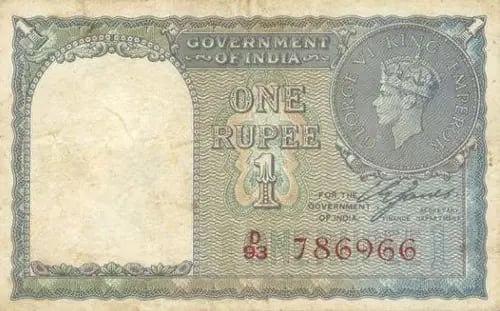
The 786 number note is one of the most searched topics in Indian paper money collecting, reflecting the cultural importance the number holds across South Asia. Many people associate 786 with good fortune or symbolic meaning and naturally want to understand the value of banknotes carrying this number.
In practice, the price and value of a 786 note depend on several factors, including serial number placement, condition, denomination, and period of issue. This guide explains the meaning of 786, why it appears on Indian banknotes, and how collectors and dealers assess its collectibility in the real market, helping buyers and sellers develop informed and realistic expectations.
What Is the 786 Number?
The number 786 is widely recognised in South Asia as a numerical shorthand associated with the Arabic phrase “Bismillah ir-Rahman ir-Rahim” (“In the name of God, the Most Gracious, the Most Merciful”). Its origin lies in the Abjad system, an ancient method that assigns numerical values to Arabic letters. When the letters of Bismillah are added together using this system, the total is commonly cited as 786.
Over time, this shorthand became popular in regions with long-established Muslim communities—particularly India, Pakistan, and Bangladesh—as a convenient symbolic substitute for writing the full phrase. Importantly, 786 is not a religious command, scripture, or officially sanctioned number. It functions as a cultural shorthand, shaped by history and custom rather than formal theology.
What is the Meaning of 786 in Islam?
Within Islam, 786 has no doctrinal or theological status. It does not appear in the Quran, Hadith, or formal religious texts. However, in South Asian Muslim culture, many people associate 786 with blessings and positive beginnings because of its symbolic link to Bismillah.
This distinction between personal belief and religious doctrine is important. While individuals may regard 786 as auspicious, Islamic teachings themselves do not prescribe numerical symbols as carriers of divine favour. The widespread use of 786 reflects regional custom, not universal religious practice, and understanding this helps keep discussions grounded and respectful.
Why is 786 Considered Lucky in India?
Across cultures, people often assign meaning to certain numbers through tradition, repetition, and social reinforcement rather than rarity. In India and South Asia, 786 gained recognition through frequent everyday use in commerce, documentation, and numbering systems.
Over time, this familiarity led to its perception as a “lucky” number. That perception eventually extended into collecting interests, including banknotes. Crucially, this transition from symbolism to collectibility is driven by sentiment and demand, not automatic scarcity—an important distinction when assessing value.
786 as a Fancy Serial Number in Indian Banknotes
In banknote collecting, a fancy serial number is one that attracts attention because of pattern, repetition, or cultural association. While globally recognised categories include solid numbers and radars, 786 is considered a fancy serial number primarily within the Indian and South Asian context due to cultural familiarity.
Collectors intentionally seek it, creating demand. However, demand alone does not create rarity. Standard 786 sequences appear regularly during normal production. Outside South Asia, 786 carries little recognition, making it a region-specific collecting phenomenon rather than a universally valued serial type.
How Common Are 786 Serial Numbers?
Serial Number Digits in Indian Banknotes
Early uniface British India notes generally used five-digit serial numbers, with limited later exceptions such as certain ₹5 notes. From the portrait issues onward, six-digit serial numbers became standard, a format used consistently for Republic of India banknotes.
Where Can 786 Appear in a Six-Digit Serial Number?
In a six-digit serial number, the sequence 786 can appear in multiple positions, including: xxx786 (ending with 786), xx786x, x786xx, and 786xxx (starting with 786)
Mathematically, each of these placements occurs with predictable regularity during normal production. This means that the presence of 786 anywhere within the serial number does not automatically imply rarity.
Probability of Notes Ending or Starting With 786
A serial ending with 786 appears once in every 1,000 notes. Within a single prefix of one million notes, there will be 1,000 such examples. The same logic applies to serials starting with 786. This predictability explains why most 786 serial numbers are common, even though collector interest may vary.
Types of 786 Notes Collectors Look For
Ordinary 786 Placement
Most 786 serials fall into ordinary placement, where the sequence appears once in a predictable position. On modern notes, these are common and usually carry little or no premium, even in uncirculated condition.
For older notes issued before 1970, including British India issues, overall survival rates are much lower. During those periods, collectors did not actively hoard symbolic serial numbers, so even ordinary 786 placements may attract a premium due to limited supply.
Double 786 Notes (786786)
A double 786 refers specifically to the serial number 786786, which appears once per million notes. This structural scarcity gives it a stronger collector appeal, though pricing still depends heavily on condition, denomination, and series.
Key-Position 786 Serial Numbers
Among modern notes, 000786, 786000, and 786786 are the only 786 serials that consistently attract a measurable premium. Each occurs once per million notes, aligning mathematical scarcity with collector interest.
Does Denomination Matter for 786 Number Notes?
Denomination influences premium percentage rather than absolute value. Lower denominations such as ₹10, ₹20, and ₹50 often show higher percentage premiums because the base value is low. Higher denominations like ₹100 and ₹500, issued in very large quantities, usually attract only modest premiums unless condition and serial placement are exceptional.
The ₹200 denomination, with a comparatively lower print run, may command slightly stronger premiums in uncirculated condition, though expectations should remain realistic. This is why searches such as “786 rs 100 note price” or “786 rs 500 note value” are common, even though denomination alone does not determine collectibility.
786 Note Price: What Determines Value
In addition to denomination, the price of a 786 number note is determined by a combination of factors, not by the presence of the number alone. Understanding these factors helps separate genuine collector premiums from unrealistic expectations.
Condition
Condition is critical. Uncirculated notes, or notes with original paper quality and no folds, command significantly more interest than circulated examples. Even minor handling marks, folds, or corner bends can reduce or eliminate any premium.
Placement of 786
Where the number 786 appears in the serial is far more important than its mere presence. Ordinary placements—where 786 appears once in a predictable position—are common and usually carry little or no premium. By contrast, key-position serials such as 000786, 786000, or 786786 are structurally uncommon and more likely to attract collector interest.
Series and Period
Notes issued before 1970, including British India and early Republic issues, tend to be scarcer overall due to lower survival rates. Modern notes are far more plentiful, which limits premiums even for desirable serials.
No single factor determines value in isolation.
Realistic 786 Note Price Ranges (Not Hype)
Claims of exceptionally high values for 786 number notes frequently circulate on YouTube, TikTok, and other social media platforms. These videos often present ordinary modern notes as rare or highly valuable, usually without explaining serial number probability, condition, or actual collector demand. In many cases, such content is designed for clickbait, and in some instances may even involve misleading or fraudulent claims.
A key reason these exaggerated figures persist is a misunderstanding of availability. Because 786 endings appear predictably during normal production, modern notes are easily available and cannot support extreme valuations. Values exist within broad ranges shaped by serial placement, period, condition, and genuine collector demand—not viral claims. Approaching 786 notes with this understanding helps collectors and sellers avoid unrealistic expectations.
Important Note for Buyers and Sellers: This article is for educational purposes only and does not represent a price offer or valuation. Banknote values vary widely based on condition, series, and market demand.
Common Myths About 786 Number Notes
Several misconceptions surround 786 number notes and often lead to unrealistic expectations. A common belief is that all 786 notes are rare, when in reality most modern examples are produced regularly and are widely available, even in uncirculated condition. The presence of the number alone does not automatically make a note scarce or highly collectible.
Another assumption is that dealers actively buy all 786 notes at high prices. In practice, professional dealers are selective and usually focus on older or genuinely scarce issues, where overall survival rates are low. Cultural or symbolic significance may influence interest, but it does not override core market factors such as availability, condition, and sustained demand. Recognising these distinctions helps collectors and sellers approach 786 number notes with realistic, market-based expectations.
Should You Buy or Sell 786 Number Notes?
Whether buying or selling a 786 number note makes sense depends largely on expectations and intent.
Collector Perspective
For collectors, 786 notes often provide emotional or cultural satisfaction. Owning such a note can be meaningful, especially when combined with an uncirculated condition or an older series. From this perspective, modest premiums may be acceptable, provided expectations remain realistic.
Investor Perspective
From an investment standpoint, modern 786 notes generally offer limited upside. Even serials that occur once per million notes are often readily available in the market. By contrast, patterns such as solid numbers attract broader, international demand. Collectors seeking stronger long-term potential usually find better opportunities in older notes, particularly pre-1970 issues, where survival rates are genuinely low.
Conclusion
The number 786 holds genuine cultural significance for many people across South Asia, and its presence on banknotes can be personally meaningful. However, cultural belief and collectibility are not the same. In the banknote market, value is shaped by availability, condition, serial placement, and sustained collector demand—not symbolism alone.
Most modern 786 notes are easy to find and carry limited premiums, while older issues may command stronger interest due to genuine scarcity. Understanding this difference helps collectors and sellers make informed decisions. Taking the time to learn how serial numbers, periods, and condition affect value is always the best first step before buying or selling.
Frequently Asked Questions
Q: Do you buy modern 786 number notes?
A: We do not actively buy modern Indian banknotes issued after 1970, even if they carry a 786 serial number. Our buying focus is primarily on older notes, particularly pre-1970 issues or genuinely rare varieties, where availability is limited and sustained collector demand exists. For more details on what we buy and our selection criteria, please see our We Buy Indian Banknotes page.
Q: Are all 786 number notes valuable?
A: No. While 786 has cultural significance, most 786 serial numbers are common by design, especially on modern notes. Dealers assess value based on availability, serial placement, condition, denomination, and period of issue. Ordinary 786 placements on modern notes often carry little or no dealer premium, regardless of cultural meaning.
Q: Why do some online videos and posts claim very high prices for 786 notes?
A: Many such claims originate from social media content that does not reflect actual dealer market behaviour. These presentations often ignore serial number probability, condition, and availability, and are commonly created for attention rather than accuracy. Professional dealers do not rely on social media price claims when assessing banknote value.
Q: Does a “1 in a million” serial number guarantee high value?
A: No. While serial numbers such as 000786, 786000, or 786786 occur once per million notes, availability and demand matter more than probability alone. Dealers prioritise patterns with broad and consistent demand. Some serial types enjoy international recognition, while others—such as 786—remain region-specific, which naturally limits pricing.
Q: Which 786 number notes are dealers more likely to be interested in?
A: Dealers are generally more interested in older 786 number notes, particularly British India and early Republic issues, where overall survival rates are low. Modern 786 notes are usually considered only when they involve key-position serials in exceptional condition, and even then, pricing expectations should remain realistic.